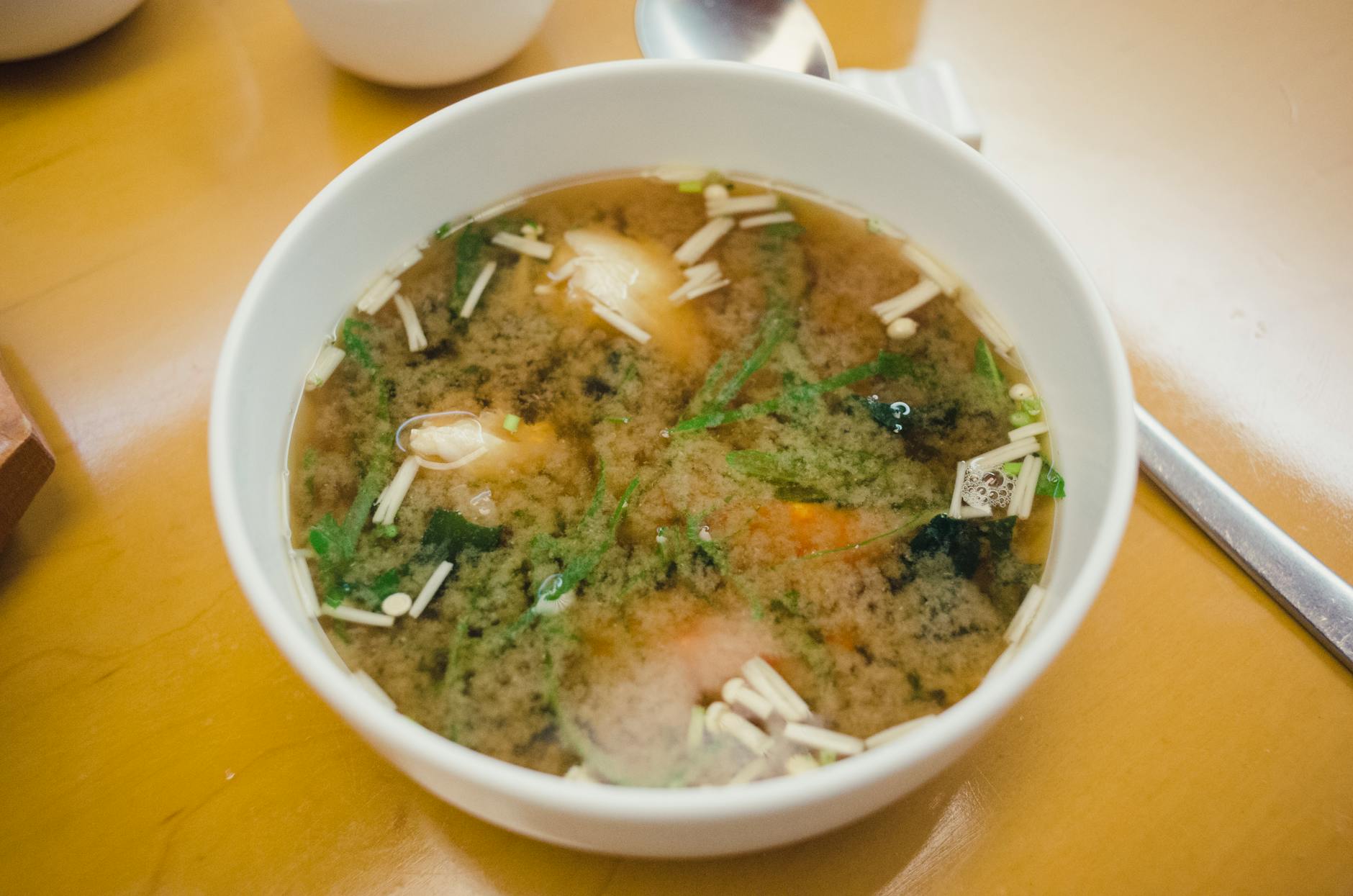
Here is a detailed look at the benefits, a classic dashi recipe, and other ways to use this incredible combination.
This combination is a powerhouse of flavor and nutrition:
- Ultimate Umami Synergy: This is their primary benefit. Kombu is rich in glutamic acid, while katsuobushi is rich in inosinic acid. When combined, they create a synergistic effect that produces a umami flavor dozens of times more powerful than either one alone. This deep, savory base enhances the taste of everything it’s added to without needing much salt or fat.
- Rich in Nutrients:
· Kombu: An excellent source of iodine (essential for thyroid function), calcium, iron, and vitamins A, C, and K. It’s also rich in soluble fiber and contains unique antioxidants.
· Katsuobushi: A great source of high-quality protein, B vitamins (especially B12), and minerals like iron, magnesium, and zinc. - Low in Calories and Fat: Dashi is an incredibly light and clean broth, making it a perfect base for soups and stews for those watching their calorie intake.
- Potential Health Properties:
· Kombu has been linked to supporting gut health and may help in lowering blood pressure.
· The compounds in katsuobushi have been studied for their potential anti-inflammatory and anti-microbial properties.
The Classic Recipe: Awase Dashi (Kombu and Bonito Stock)
This is the fundamental recipe used in miso soup, noodle broths, simmered dishes, and more.
Ingredients:
· 1 liter (about 4 cups) cold water
· One 10-15 cm (4-6 inch) piece of dried kombu
· 20-30 grams (about 1 cup, loosely packed) katsuobushi (bonito flakes)
Equipment:
· A medium-sized pot (not iron, as it can discolor the dashi)
· A fine-mesh sieve or a colander lined with cheesecloth/paper towel
Instructions:
- Cold Soak the Kombu: Place the kombu in the pot with the cold water. Let it soak for at least 30 minutes (or up to several hours in the fridge) to gently extract the flavors. You will see the kombu soften and rehydrate.
- Heat Gently: Place the pot over medium-low heat. Just before the water comes to a full boil (when small bubbles start forming at the edge), remove the kombu. This is crucial, as boiling the kombu can make the dashi slimy and bitter.
· Pro Tip: Save the removed kombu! You can chop it and use it in other dishes like tsukudani (simmered in soy sauce and mirin). - Add the Katsuobushi: Bring the kombu-infused water to a full boil. Then, turn off the heat.
- Steep the Flakes: Immediately add the katsuobushi. It will sink and then rise back to the surface. Let it steep for 1-3 minutes. Do not simmer it at this stage, or the dashi will become bitter and too strong.
- Strain: Place your sieve or lined colander over a bowl. Gently pour the dashi through it to strain out the katsuobushi flakes.
· Pro Tip: Do not squeeze the flakes in the sieve, as this can also release bitterness. Let it drain naturally for a clear, refined broth.
Your clear, fragrant, and umami-packed dashi is ready to use! It will keep in the refrigerator for 3-4 days.
How to Use Your Kombo Bonito Dashi
· Miso Soup: The most classic use. Heat dashi, dissolve miso paste into it, and add tofu, wakame, and green onions.
· Noodle Soup Base: For soba, udon, or ramen.
· Simmering Liquid (Nimono): Use it to simmer vegetables, tofu, or fish. It adds incredible depth.
· Chawanmushi: A delicate savory egg custard.
· Sauces and Dressings: Use it to dilute soy sauce, mirin, and rice vinegar for a fantastic salad dressing or dipping sauce.
Bonus Recipe: Simple & Healthy Miso Soup with Tofu and Wakame
Ingredients:
· 2 cups freshly made kombo bonito dashi
· 2-3 tbsp miso paste (white/red, to your taste)
· ¼ cup soft tofu, cubed
· 1 tsp dried wakame flakes
· Green onion, thinly sliced, for garnish
Instructions:
- Heat the dashi in a pot until it’s hot but not boiling.
- In a small bowl, scoop out a ladleful of hot dashi and whisk it with the miso paste until smooth. This prevents lumps.
- Turn off the heat under the pot. Stir the dissolved miso back into the pot.
- Add the cubed tofu and dried wakame. Let it sit for a minute—the residual heat will cook the tofu and rehydrate the wakame.
- Ladle into bowls, garnish with green onion, and enjoy the ultimate benefit of your kombo bonito creation!
Enjoy your journey into the heart of Japanese cooking
Leave a Reply
You must be logged in to post a comment.