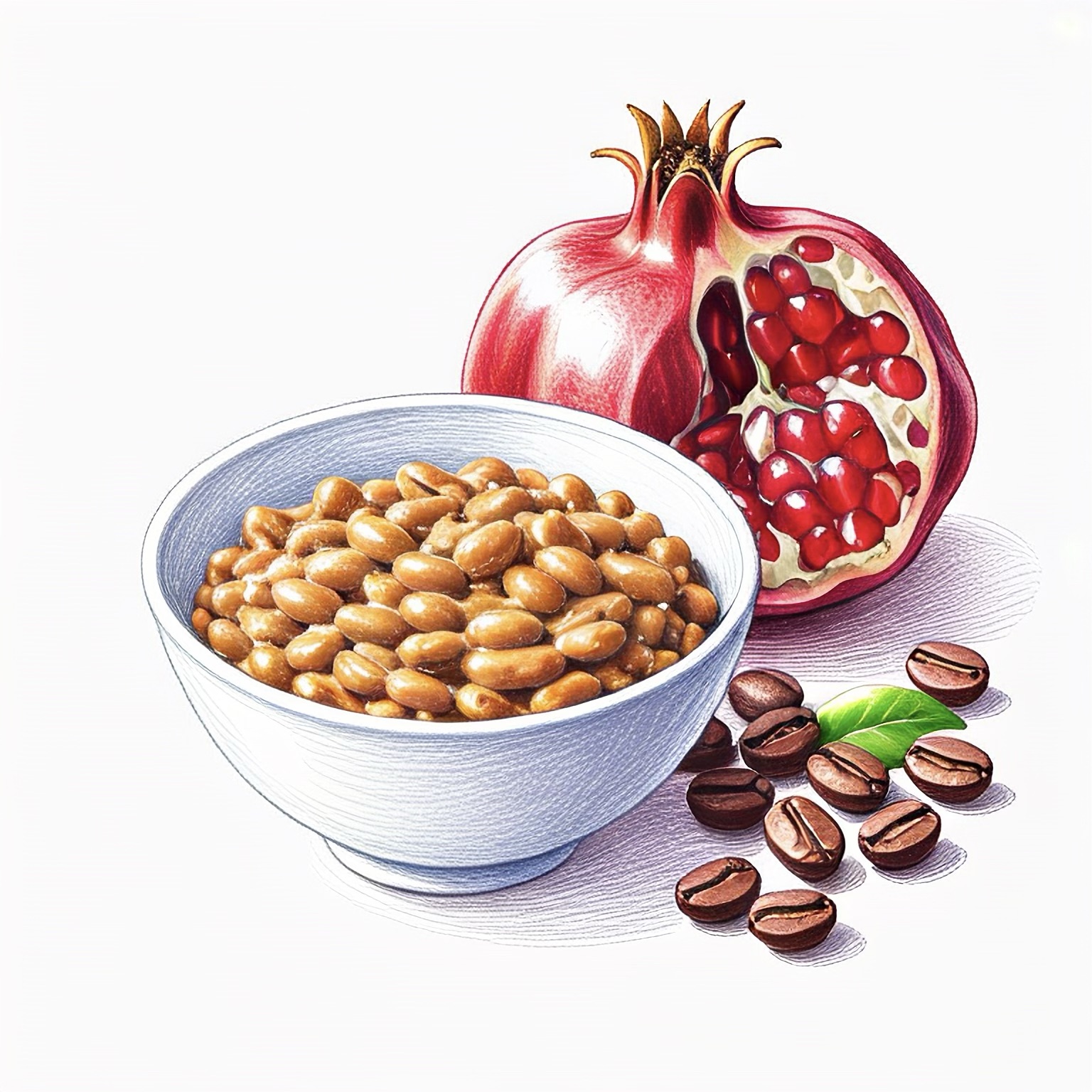
Most people think autophagy — your body’s powerful cellular cleanup and recycling system — only kicks in after days of strict fasting. But emerging science shows that’s not the whole story. Certain everyday foods can trigger autophagy through specific molecular pathways, helping your cells stay clean, efficient, and resilient without extreme calorie restriction.
Autophagy naturally declines after age 25, which has been linked to accelerated aging and increased risk of conditions like Alzheimer’s, cancer, and metabolic disorders. The good news? You can support it daily through targeted nutrition.
In this post, we’ll explore exactly how five accessible foods activate autophagy, the biology behind them, practical amounts to consume, and how to stack them for the best results.
What Is Autophagy and Why Does It Matter?
Autophagy (literally “self-eating”) is your cells’ housekeeping process. It identifies damaged proteins, dysfunctional mitochondria, and other cellular debris, then recycles them into new building blocks or energy. This keeps tissues healthy and prevents the buildup of harmful aggregates.
When autophagy slows with age, waste accumulates — think amyloid plaques in the brain or dysfunctional mitochondria contributing to fatigue and disease. While prolonged fasting is a potent trigger (by suppressing mTOR and activating AMPK), certain food compounds can activate parallel or complementary pathways, making daily autophagy support realistic and sustainable.
The Key Pathways: mTOR-AMPK Switch and Beyond
Fasting works largely by inhibiting mTOR (a growth signal that can suppress cleanup when overactive) and activating AMPK (an energy sensor that promotes repair). Many foods influence these same switches or use other routes like SIRT1 activation, epigenetic changes, or direct effects on mitophagy (mitochondrial cleanup).
Now, let’s dive into the five foods.
1. Extra Virgin Olive Oil (Oleocanthal & AMPK Activation)
High-quality, peppery extra virgin olive oil (EVOO) is a Mediterranean diet staple with strong autophagy-activating potential. Its unique compound oleocanthal can destabilize lysosomes (the cell’s recycling centers) in a controlled way and upregulate Beclin-1, a key autophagy protein. It may also help clear amyloid-beta in brain cells.
How to use it: Aim for 2–4 tablespoons daily. Drizzle on salads, vegetables, or take a spoonful straight. Choose fresh, high-polyphenol EVOO that has a peppery or bitter kick — that’s your sign of active compounds.
2. Coffee (Chlorogenic Acid – Deepens the Fasted State)
Black coffee, particularly light-roast, contains chlorogenic acid, which activates autophagy via AMPK, NRF2 (antioxidant response), and mild mTOR inhibition. Importantly, it doesn’t “break” a fast in the metabolic sense and can actually enhance autophagy when consumed in a fasted state.
How to use it: Drink 2–4 cups of black coffee daily. Light roasts often have higher chlorogenic acid content. Enjoy it before meals to stack with intermittent fasting windows.
3. Green Tea (EGCG – Caloric Restriction Mimic)
Epigallocatechin gallate (EGCG), the star compound in green tea, mimics aspects of caloric restriction at the cellular level. It activates AMPK, upregulates Beclin-1, helps clear protein aggregates (such as alpha-synuclein linked to Parkinson’s), and supports mitochondrial biogenesis.
How to use it: Brew 3–4 cups daily (aiming for 300–600 mg EGCG). Use water at 75–80°C to avoid bitterness, and add a squeeze of lemon to improve absorption of catechins.
4. Spermidine-Rich Foods (Wheat Germ, Mushrooms, Aged Cheese)
Spermidine is a polyamine that induces autophagy through epigenetic mechanisms — it inhibits histone acetyltransferases, essentially turning on longevity-related genes. Research shows it extends lifespan in model organisms and is associated with lower mortality in humans.
Good sources include wheat germ, certain mushrooms, soybeans, and aged cheeses.
How to use it: Add 3–4 tablespoons of wheat germ to smoothies, yogurt, or oatmeal daily. Combine with other natural sources for variety.
5. Resveratrol Sources (The Bioavailable Form & SIRT1 Connection)
Resveratrol activates SIRT1, a protein tied to longevity and autophagy. While red wine and grapes contain it, absorption can be limited. The video emphasizes choosing forms your body can actually use effectively (often discussed in the context of supplements or concentrated sources, but whole-food approaches are highlighted).
It supports the resveratrol-SIRT1 axis for cellular stress resistance.
Practical tip: Focus on consistent intake through quality sources, and pair with other foods for better synergy.
(Note: The video stresses the importance of the right dose and form for real bioavailability.)
How to Stack These Foods for Compounding Effects
The real power comes from combining them daily. A sample protocol could look like:
- Morning: Black coffee (fasted or early)
- With breakfast/lunch: EVOO on meals + wheat germ
- Throughout the day: 3–4 cups green tea
- Consistent pomegranate or resveratrol-rich elements if expanding the list
This approach targets multiple pathways (AMPK, mTOR, SIRT1, epigenetics, mitophagy) for a synergistic boost. It pairs beautifully with the Mediterranean diet pattern, which is already linked to exceptional longevity.
Foods to Avoid (That Can Block Autophagy)
To maximize benefits, limit high-sugar foods, refined carbohydrates, and heavily processed seed oils, which can chronically elevate mTOR and promote inflammation.
Final Thoughts
You don’t need marathon fasting sessions to support autophagy. By thoughtfully incorporating these five foods — extra virgin olive oil, coffee, green tea, spermidine-rich options, and resveratrol sources — you can promote cellular cleanup as part of your normal routine.
This strategy is practical, evidence-informed, and sustainable. Always consult your healthcare provider before making significant dietary changes, especially if you have existing health conditions.
What do you think — ready to try the daily autophagy stack? Share your favorite way to include these foods in the comments!
Sources & Disclaimer: This post is based on the educational content from the referenced YouTube video and summarizes peer-reviewed mechanisms discussed there (e.g., studies in journals like Nature Metabolism and Cell Reports). It is for informational purposes only and not medical advice.
Converting ellagitannins (ETs, often misspelled as “eligins”) to urolithin A (UA, or “eurolithin A”) is a multi-step, microbiota-dependent biotransformation that doesn’t happen instantly in everyone. It relies on specific gut bacterial taxa and enzymes, and “developing” the microbes—enriching or colonizing the right strains—can indeed take weeks to months in non-producers. Here’s the rigorous, science-backed explanation.
The Biochemical Pathway: A Sequential Microbial Cascade
Ellagitannins (complex polyphenols from pomegranates, walnuts, berries, etc.) are first hydrolyzed in the upper GI tract (stomach/small intestine) by host enzymes and pH to release ellagic acid (EA). EA has very low bioavailability and reaches the colon largely intact. There, the gut microbiota performs a series of anaerobic transformations:
- Lactonase/decarboxylase activity → opens one lactone ring of EA, yielding urolithin M-5 (pentahydroxy-urolithin).
- Successive dehydroxylations (removal of hydroxyl groups at specific positions) via bacterial reductases/dehydroxylases → tetrahydroxy-urolithins (e.g., urolithin D/M6) → trihydroxy (urolithin C/M7) → dihydroxy (urolithin A or iso-urolithin A) → monohydroxy (urolithin B in some cases).
Key enzymes include molybdenum-dependent dehydroxylases (encoded by the ucd operon in certain species) that reduce catechol-containing precursors like urolithin C to UA. This is not done by a single bacterium but through cooperative or sequential action in the community.19
The primary producers identified so far belong to the Eggerthellaceae family and related taxa:
- Gordonibacter urolithinfaciens and G. pamelaeae (early steps: EA → urolithin M-5/C).
- Ellagibacter isourolithinifaciens.
- Enterocloster spp. (e.g., E. bolteae, E. asparagiformis) — recently shown to handle the critical final dehydroxylation via inducible molybdenum-dependent enzymes.17
These reactions occur primarily in the stationary growth phase of the bacteria under anaerobic conditions, not during rapid log-phase proliferation.
Why Not Everyone Produces UA: Urolithin Metabotypes (UMs)
Humans fall into three stable urolithin metabotypes based on fecal microbiota composition:
- UM-A: Efficient UA producers (UA as main terminal metabolite).
- UM-B: Produce UA + iso-UA and/or urolithin B.
- UM-0 (non-producers, ~10–60% of populations depending on age/ethnicity): Only accumulate early intermediates (e.g., urolithin M-5/M6) or nothing; lack the key dehydroxylase-encoding taxa.
Only ~30–40% of people naturally produce meaningful systemic UA from diet alone. Even with a high-ET challenge like pomegranate juice, only ~40% show significant plasma UA-glucuronide after 24 hours; ~60% remain low/non-converters. Baseline detection is as low as 12% in some cohorts.25
Why “Developing” These Microbes Takes Months: Ecological and Kinetic Barriers
The conversion itself (once the right bacteria are present in sufficient density) can happen in hours to days in vitro:
- Pure strains convert EA → UA in ~40–50 hours (mid-log to stationary phase).
- Mixed fecal cultures take 7–13+ days for full profiles in batch fermentation.
But in the living human gut, “developing” the functional capacity in non-producers or low-producers is much slower for these reasons:
- Colonization resistance by the resident microbiome: The established gut ecosystem (dominated by Bacteroides, Firmicutes, etc.) actively resists newcomers via niche competition, short-chain fatty acid production, bile salt hydrolases, bacteriocins, mucus barrier reinforcement, and immune surveillance (e.g., IgA coating). Low-abundance UA-producers (<0.1–1% relative abundance) need strong, repeated selective pressure from EA substrate to bloom.
- Slow growth kinetics and stationary-phase dependence: UA-producing taxa like Gordonibacter and Enterocloster are fastidious anaerobes with modest growth rates (doubling time often >12–24 h in gut conditions). Conversion enzymes are induced and active mainly in stationary phase, after the community reaches carrying capacity. Initial seeding from diet/probiotics yields only transient increases.
- Substrate-driven selection takes time: Consistent ET/EA intake acts as a prebiotic-like selector, but microbiome shifts are gradual. Short-term (1–7 days) pomegranate intake rarely converts UM-0 individuals. Functional changes (detectable UA production and plasma levels) typically require 4–12+ weeks of daily exposure as the taxa enrich, form biofilms, and stabilize via horizontal gene transfer or cross-feeding.
- Host and environmental factors: Age-related microbiome decline, prior antibiotic use, high-fat/low-fiber diets, inflammation, or transit time all slow engraftment. Metabotypes are relatively stable but can shift slowly with long-term dietary patterns or targeted probiotics (e.g., next-gen strains like Gordonibacter or Bifidobacterium isolates).
- Clinical evidence for the timeline: Dietary interventions show partial conversion emerging over weeks, but robust, reliable UA production in former non-producers often needs months of consistent ET-rich intake or probiotic supplementation. This is why direct UA supplements (e.g., 500–1000 mg Mitopure) were developed—they bypass the microbiome bottleneck entirely and achieve consistent plasma levels regardless of metabotype.24
In short, the microbes aren’t “instantly” present or active in most people. Developing a UA-producing community requires ecological succession: repeated substrate exposure → enrichment of rare taxa → stable functional consortium. This process mirrors other microbiome adaptations (e.g., fiber-fermenting capacity) and reliably takes weeks to months rather than days.
If you’re consuming pomegranate or other ET sources for autophagy/mitophagy benefits (as discussed in the video), pair it with strategies like diverse fiber/prebiotics to accelerate microbiome shifts—or consider direct UA supplementation for immediate effects. This is why the video (and science) emphasizes patience and consistency for natural microbial “training.”
To accelerate the development of urolithin A (UA)-producing microbes (such as Gordonibacter spp., Ellagibacter isourolithinifaciens, Enterocloster spp., and supportive taxa like certain Bifidobacterium and Lachnospiraceae), focus on diverse prebiotic fibers. These provide fermentable substrates that increase overall microbiome diversity, promote short-chain fatty acid (SCFA) production (especially butyrate), reduce colonization resistance, and create a favorable anaerobic environment for slow-growing, fastidious UA-producers.
Diverse fibers encourage ecological succession: they feed cross-feeding networks where primary degraders (e.g., Bifidobacterium) break down complex carbs and release intermediates that support secondary metabolizers involved in ellagic acid → UA conversion. Evidence shows synergies, such as fructooligosaccharides (FOS) enhancing cooperative pathways (e.g., Bifidobacterium pseudolongum initiating early steps and Enterococcus faecalis driving later dehydroxylations to UA). Multi-species synbiotics with fibers have boosted Gordonibacter abundance and UA output over weeks to months.4
Recommended Diverse Prebiotic Fibers & Food Sources
Aim for 25–40+ g total fiber daily from varied sources (mix soluble/insoluble, fermentable types) alongside consistent ellagitannin intake (pomegranate, berries, walnuts). Rotate foods for maximum diversity.
- Fructans & Fructooligosaccharides (FOS): Highly bifidogenic; support early ellagic acid metabolism and cross-feeding for UA.
Sources: Jerusalem artichokes, chicory root, garlic, onions, leeks, asparagus, green bananas, dandelion greens. (Target 5–10 g/day from food or supplements.) - Galactooligosaccharides (GOS): Promote Bifidobacterium and Lactobacillus spp., which correlate with improved UA pathways in some studies.
Sources: Legumes (beans, lentils, chickpeas), human milk oligosaccharide analogs (supplements), or small amounts in soybeans. - Beta-glucans: Increase SCFA producers and overall diversity; found in grains that also provide arabinoxylans.
Sources: Oats, barley, whole rye, mushrooms (e.g., shiitake, reishi for beta-glucans + other polysaccharides). - Arabinoxylans & Arabinoxylan Oligosaccharides (AXOS): Fermentable by Bifidobacterium and Lachnospiraceae (key for final UA steps); boost butyrate.
Sources: Whole wheat, rye bran, barley, wheat germ (also spermidine-rich, tying back to autophagy support). - Pectins & Resistant Starches (Type 2/3): Enhance butyrate and microbial richness; pectin-rich foods show prebiotic effects in ellagitannin contexts.
Sources: Apples, pears, citrus (oranges, grapefruits), carrots, potatoes (cooled/cooked then cooled for resistant starch), green bananas, plantains, legumes. - Inulin & Other Soluble Fibers: General microbiome diversity boosters that help rare taxa like Eggerthellaceae bloom under substrate pressure.
Sources: Chicory, Jerusalem artichoke, asparagus, bananas, onions. - Polyphenol-Fiber Synergies (from ET-rich foods themselves): Pomegranate peel/fiber or whole berries provide both ellagitannins and fermentable fibers that selectively increase Bifidobacterium and butyrate while supporting UA producers. Walnut/berry fibers add similar benefits.
Practical Daily Stack Example (build gradually to avoid bloating):
- Breakfast: Oat/barley porridge with apple, berries, and wheat germ.
- Lunch: Lentil/chickpea salad with onions, garlic, carrots, and EVOO.
- Snack: Jerusalem artichoke chips or banana + handful walnuts.
- Dinner: Roasted vegetables (asparagus, leeks, mushrooms) with pomegranate seeds or juice.
- Add variety weekly: rye bread, cooled potatoes, citrus.
Combine with the autophagy foods from the video (EVOO, coffee, green tea) for multi-pathway support. Consistent intake over 4–12+ weeks is key for measurable shifts in metabotype and UA levels.
Link to the Original Video
Here’s the YouTube video you referenced for context on the 5 autophagy-activating foods (which pair excellently with this fiber strategy):
Eat These 5 Foods to Activate Autophagy Without Fasting
https://youtu.be/vEqbg-TmxHA
Tips for Success:
- Increase fiber slowly (add 5 g/week) with plenty of water.
- Pair with fermented foods (yogurt, kefir, kimchi) for probiotic diversity.
- Track progress indirectly via energy, digestion, or (if possible) UA metabolite testing.
- For faster results in non-producers, consider targeted synbiotics or direct UA supplements alongside this approach.
This fiber diversity creates a resilient ecosystem that makes “training” UA-producing microbes more efficient over months. If you’d like recipes, a sample 7-day meal plan, or adjustments for specific diets, let me know!