title: “More Than a Meal: The Disco-Dancing, Jet-Propelled Wonder of the Scallop”
date: “2023-10-15”
author: “Marine Life Enthusiast”
tags: [“marine-biology”, “seafood”, “science”, “fun-facts”]
When you think of a scallop, you probably picture a perfect, creamy-white medallion seared to a golden-brown crust in a fancy restaurant. But the creature that delicious morsel comes from is one of the ocean’s most fascinating and unlikely marvels. Let’s dive past the plate and into the incredible world of the scallop.
The Muscle Behind the Magic
First things first: what are you actually eating? That sweet, tender disc is the scallop’s adductor muscle. This is the scallop’s powerhouse—the muscle it uses to open and, more importantly, slam its shells together. But it has a much more glamorous nickname: the “Disco Scallop.”
Why? When you see it raw, this muscle has a stunning, shimmering, iridescent quality. It looks like a tiny opal or a piece of glittery 70s fabric. This isn’t due to pigment; it’s a structural color, created by the way light bounces off microscopic layers of protein. It’s a natural light show, a tiny disco ball hiding in a shell. And just like a disco when the lights come on, the magic disappears when you cook it, turning the shimmering muscle into the solid, opaque white we’re familiar with.

Meet the Scallop: Clam, But Make It Extra
While scallops are bivalves (like clams and oysters), they are the overachievers of the family. They are the only bivalves that can truly “swim”!
How? By using that powerful adductor muscle to clap their shells together rapidly. They suck water into their shell and then forcefully expel it, creating a jet propulsion that lets them swim in short, surprising bursts. They can even control their direction! Seeing a scallop suddenly zoom backwards to escape a predator is like watching a rock suddenly turn into a submarine. It’s a breathtaking sight.
A Coat of 200 Eyes
If swimming wasn’t cool enough, scallops have one of the most unique visual systems in the animal kingdom. Lining the soft, fleshy edge of their mantle (the part you see peeking out of the shell) are up to 200 eyes.
Yes, you read that right. Two. Hundred. Eyes.
Each eye has a lens, a cornea, and a complex retina. They likely don’t see a detailed image like we do, but they are exquisitely tuned to detect changes in light and motion—specifically, the shadow of an approaching predator like a starfish or a crab. This early-warning system is what triggers their signature escape swim.

From Ocean Floor to Your Plate
This incredible biology is what makes scallops such a prized culinary ingredient. Their active lifestyle gives their muscle a firm, clean texture and a sweet, delicate flavor. There are two main types you’ll encounter:
- Sea Scallops: The big guys. These are larger, often harvested from deep, cold ocean waters. They are perfect for searing.
- Bay Scallops: Smaller, sweeter, and more tender. They are typically found in shallow bays and estuaries.
When cooking, the key is a hot pan and not to overcrowd them. The goal is that beautiful caramelized crust while keeping the inside tender and moist. And remember, that “disco” iridescence you might see on a raw scallop is a sign of peak freshness—it’s completely natural and safe.
A Symbol Through the Ages
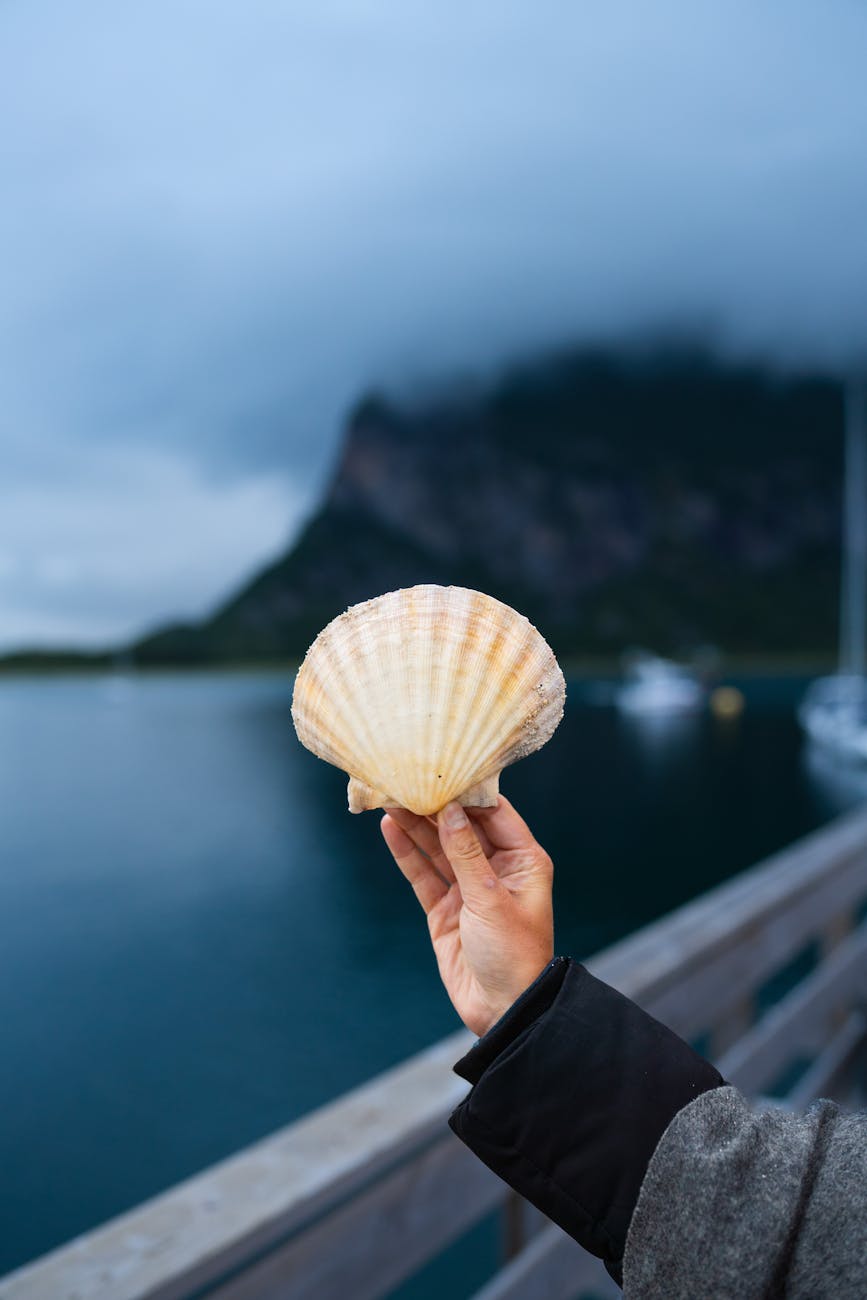
The scallop shell isn’t just a home; it’s a powerful symbol. For centuries, it has been the emblem of the Camino de Santiago, a famous pilgrimage route across Europe. Pilgrims would wear the shell to signify their journey and used it as a practical tool for drinking water or eating. The shell’s grooves, which all converge at a single point, are said to represent the many paths pilgrims travel, all leading to one sacred destination.

The Next Time You See a Scallop…
So, the next time you enjoy a perfectly seared scallop or spot a beautiful shell on the beach, take a moment to appreciate the wonder it represents. It’s a jet-propelled swimmer with a coat of a hundred eyes, a disco-dancing muscle, and a history steeped in pilgrimage. It’s not just a seafood dish; it’s a tiny, miraculous reminder of how strange and wonderful life under the waves can be.
Want to see a scallop in action? Search online for “swimming scallop video” – it’s an experience you won’t forget!
Tags: #MarineBiology #Scallops #OceanWonders #Seafood #ScienceFacts
Leave a Reply
You must be logged in to post a comment.