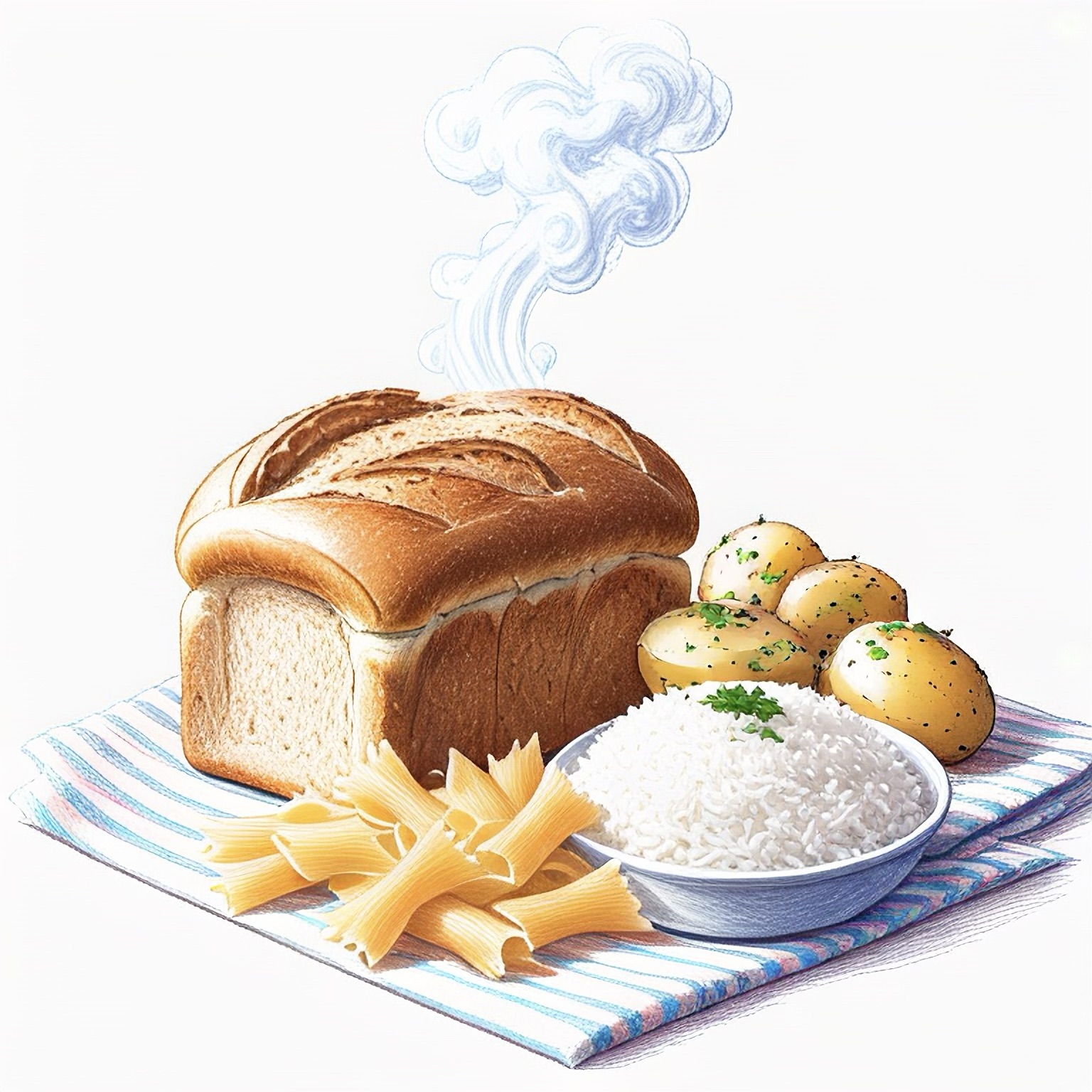
Ever wondered if there’s an easy way to make everyday staples like pasta, rice, potatoes — and even bread — better for your blood sugar, gut health, and overall metabolism? The answer lies in a fascinating (and completely free) process called starch retrogradation.
This technique has gained popularity through social media tips (like the one shared by @TheEcho13 on X), and the science backs it up surprisingly well.
What Is Retrogradation and Resistant Starch?
When you cook starchy foods, the heat causes the starch molecules to gelatinize — they swell, absorb water, and become easily digestible, leading to a quick rise in blood sugar.
But when those same cooked foods cool down (especially in the fridge for 12–24+ hours), something remarkable happens: the starch molecules realign and recrystallize into a more ordered structure. This creates retrograded starch, also known as Type 3 Resistant Starch (RS3).
Resistant starch earns its name because it resists digestion in the small intestine. Instead of turning into glucose right away, it passes through to the large intestine, where gut bacteria ferment it — acting like a powerful prebiotic fiber.
The Health Benefits Backed by Research
Studies consistently show that increasing RS3 through cooling offers several advantages:
- Lower glycemic response — Meals with higher resistant starch produce smaller blood sugar spikes and lower overall glucose excursions. Human trials have shown reductions in post-meal blood glucose and insulin responses.
- Improved insulin sensitivity — By moderating glucose release, it helps with better metabolic control — especially useful for people managing prediabetes, type 2 diabetes, or anyone wanting more stable energy levels.
- Gut microbiome support — The fermentation produces short-chain fatty acids (SCFAs) like butyrate, which nourish colon cells, reduce inflammation, and support overall gut health.
- Potential calorie impact — Resistant starch delivers roughly half the calories of regular digestible starch (around 2 kcal/g vs. 4 kcal/g), though the practical difference per meal is usually modest.
Meta-analyses and reviews (including work published in journals like The American Journal of Clinical Nutrition and Nutrients) confirm these effects, with cooling cooked starches reliably increasing RS3 content.
How Much Difference Does It Make? Real-World Numbers
The exact increase varies by food type, cooking method, cooling time/temperature, and even variety — but here are some typical findings from studies:
- Rice — Cooling cooked white rice for 24 hours can increase resistant starch 2–3× compared to freshly cooked. One study showed reheated cooled rice still had significantly more RS than fresh.
- Potatoes — Freshly boiled potatoes are high in quickly digestible starch; chilling reduces rapidly digestible starch while boosting RS and slowly digestible fractions. Reheating often partially reverses some gains (more so in some varieties like russets), but net benefit usually remains.
- Pasta — This is where the hack shines. Multiple human trials show cooled pasta lowers the glycemic response. One surprising result: cooking → chilling → reheating sometimes produces the biggest benefit — with reductions in blood glucose area under the curve (AUC) of up to ~50% in some early studies, and more modest but consistent improvements (10–30%) in others. Reheated cooled pasta often returns blood sugar to baseline faster than freshly cooked or even cold versions.
- Bread — Freezing or refrigerating after toasting/cooking can boost RS content, especially in certain whole-grain varieties.
Reheating doesn’t completely erase the benefits — in many cases it preserves most of the RS3, and sometimes even enhances the metabolic effect through other structural changes.
How to Do It at Home (Practical Tips)
- Cook normally — Boil, bake, or steam your pasta, rice, potatoes, etc.
- Cool it down — Refrigerate for at least 12–24 hours (overnight is perfect). Longer cooling = more retrogradation in most cases.
- Reheat (optional but often ideal) — Microwave, pan-fry, or oven-reheat. Many studies show the biggest blood sugar benefits with the cooled-then-reheated version.
- Bonus hacks — Add a little fat/oil during cooking (helps form another type of resistant starch), or use higher-amylose varieties (e.g., basmati rice, certain potatoes) for even better results.
Examples:
- Make a big batch of rice or pasta → fridge overnight → reheat portions as needed.
- Potato salad (chilled) or reheated leftover roast potatoes.
- Toast bread, cool it, freeze, then toast again.
Bottom Line
This isn’t a miracle that turns pasta into kale, but it’s one of the most evidence-based, zero-cost kitchen tweaks you can make. By simply cooking, cooling, and (if you like) reheating common starches, you shift some of the carbs into resistant starch — giving you better blood sugar control, happier gut bugs, and a small metabolic edge.
Next time you’re meal-prepping, try it. Your future self (and your microbiome) will thank you.
What starchy food are you going to “retrograde” first? 😄