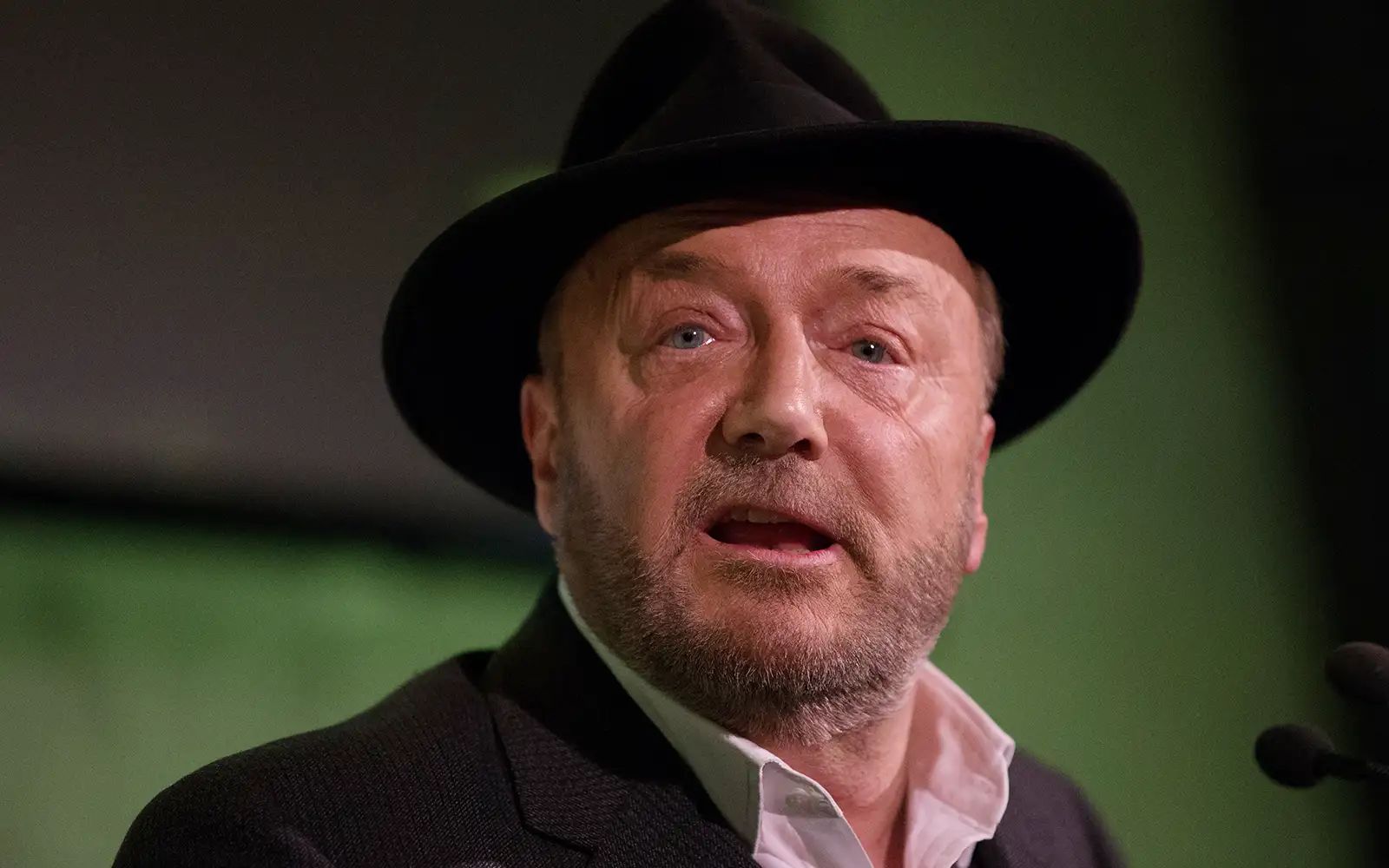
Galloway’s vocabulary is a deliberate tool: it’s combative, theatrical, historically resonant, and designed to frame debates on his terms. Here’s a breakdown of its key components:
1. Theatrical & Declamatory Language
He uses grandiose, performative words suited for a public meeting or a stage.
- “Sir!” – His classic, contemptuous opening in debates, often drawn out for effect (“Siiiiir…”), used to challenge an opponent’s premise or integrity.
- “I met him in the chamber of the House of Commons and I… [smote him hip and thigh]” – A biblical phrase (Judges 15:8) he famously used about Tony Blair, blending physical and political combat.
- “Lionhearted!” – Used to describe figures he admires for their defiance (e.g., Julian Assange).
- “A river of blood” – Evoking Enoch Powell’s infamous speech to warn of dire consequences from policies he opposes.
2. Political-ideological Labels (Often Pejorative)
He excels at attaching loaded, historically-charged labels to his opponents.
- “Zionist” – Used specifically and deliberately, not synonymously with “Jewish,” to describe proponents of a Jewish state he views as expansionist.
- “Neo-conservatives” / “Neocons” – His go-to term for architects of the Iraq War and liberal interventionists.
- “Blairites” – A term of utter disdain for the centrist, pro-war wing of the Labour Party.
- “The Establishment” – A monolithic force of media, political, and security power arrayed against him.
- “Quisling” – For those he sees as collaborators with occupying powers (from the WWII Norwegian traitor).
- “Trotskyite” or “Tankie” – Sometimes used dismissively against far-left critics who he believes are sectarian or apologists for authoritarian regimes.
3. Vocabulary of Resistance & Martyrdom
Drawn from anti-imperial and leftist struggles.
- “The Resistance” – Capitalised, to refer specifically to Hezbollah in Lebanon or, historically, Iraqi insurgents post-2003.
- “Martyr” (Shaheed) – Used for figures like Qasem Soleimani or civilians killed in conflicts like Gaza, accepting the term’s cultural and religious weight in the region.
- “Vanguard” – A Leninist term he applies to movements he sees as leading a struggle.
- “Struggle” – Preferred over “conflict” or “war,” implying a moral and political fight.
4. Classical Rhetorical & Literary Flourishes
- “Ich dien” (I serve) – The Prince of Wales’s motto, which he quoted to claim moral service to the people against the elite.
- “Sic semper tyrannis” (Thus always to tyrants) – Another Latin phrase, used after events like the death of Osama bin Laden or Saddam Hussein.
- “Potemkin village” – To describe something as a facade or sham.
5. Scottish Vernacular & Populist Demotic
He blends the high-flown with the street-level to connect with his base.
- “Weel” (Well) – A Scottish inflection in his speech.
- “Bampot” or “Numptie” – Scottish slang for a fool or idiot, used for lighter ridicule.
- “Flippin’” or “Bloody” – Mild, old-fashioned British expletives for emphasis.
- “The people” / “Ordinary people” – Constant refrain, positioning himself as their tribune against the powerful.
6. Legalistic & Forensic Terms
From his experience as an accused (in Senate hearings) and an accuser.
- “I am not now, nor have I ever been…” – A deliberate echo of responses to McCarthyism.
- “Mendacious” – A favourite, more forceful than “lying.”
- “Preposterous” / “Calumny” / “Slander” – For accusations against him.
- “Incontrovertible” – To present his own evidence as irrefutable.
7. Religious Vocabulary
Reflecting his Catholic faith and its social teaching.
- “Here I stand, I can do no other” – Echoing Martin Luther, to show principled defiance.
- “A sin” / “Immoral” – Framing political acts (e.g., austerity, war) in theological terms.
- “Faith and charity” – Used in a social justice context.
Why This Vocabulary Works (For His Audience):
- Framing Power: It immediately sets the debate within a narrative of heroic resistance vs. villainous empire.
- Identity Signaling: It tells his supporters, “I am educated, I am radical, I am on your side, and I am unafraid to use the words the establishment shies away from.”
- Memorable Soundbites: Phrases like “Siiir…” or “smote him hip and thigh” are perfectly crafted for media clips and social media amplification.
- Erasure of Nuance: Terms like “Zionist” or “Neocon” are totalising; they assign an entire worldview to an opponent, closing down granular debate.
In essence, George Galloway’s individual vocabulary is a crafted weapon. It’s not just what he argues, but the very linguistic armoury he chooses that defines his political combat. It’s archaic and modern, erudite and demotic, designed to shock, persuade, and forever mark him as an outsider speaking truth to power in a language all his own.
George Galloway, the British politician and broadcaster, is known for his erudition, rhetorical flair, and tendency to draw on a wide range of historical, literary, and political references—some of which are quite obscure. Here are some of the rare or lesser-known works and references he has been known to use or cite, which reflect his intellectual interests in anti-imperialism, leftist history, Middle Eastern politics, and literary classics.
1. Political & Historical References
- “The Great Game” by Peter Hopkirk: Galloway has referenced this work (and the historical concept itself) when discussing Western intervention in Central Asia and the Middle East, drawing parallels between 19th-century imperial rivalry and modern geopolitics.
- Works of John Reed: While Reed’s Ten Days That Shook the World is famous, Galloway might reference Reed’s lesser-reported writings on journalism or his early work, aligning with Galloway’s own view of radical journalism.
- “Blackshirts and Reds” by Michael Parenti: This critique of both fascism and Cold War anti-communism fits Galloway’s ideological framework, and he has likely drawn on Parenti’s analysis of “right-wing socialism” or the “cultural apparatus.”
- “Killing Hope” by William Blum: A detailed history of CIA interventions, which Galloway has used to substantiate accusations of US imperialism.
- “The Revolution Betrayed” by Leon Trotsky: Galloway, despite not being a Trotskyist, has used Trotsky’s critique of Stalinist bureaucracy to critique certain leftist regimes or movements he sees as having lost their way.
2. Literary & Poetic References
- “The Rubaiyat of Omar Khayyam”: Galloway has quoted from this Persian poetry collection, especially in discussions about Middle Eastern culture, mortality, or pleasure, reflecting his romantic and humanist side.
- “The City of Wrong” by Mohamed Kamel Hussein: A philosophical Islamic work about the events of Good Friday from an Islamic perspective. Galloway referenced this during a 2013 speech at an Oxford Union debate on Israel-Palestine, showcasing his deep, interfaith literary knowledge.
- Poetry of Mahmoud Darwish: While Darwish is famous in the Arab world, Galloway’s recitation or quoting of his lesser-known poems in political contexts is notable to Western audiences.
- “The Lays of Ancient Rome” by Thomas Babington Macaulay: Galloway, a skilled orator, has been known to quote classical-style verse, and Macaulay’s heroic lays fit his rhetorical style.
3. Personal & Autobiographical References
- “I’m Not the Only One” (his autobiography): While not “rare” per se, he often draws anecdotes from his own life story—such as his expulsion from Labour, his meeting with Saddam Hussein, or his “Big Brother” appearance—as political parables.
- “The George Galloway Show” Podcast Archives: His own vast archive of radio shows and podcasts contains deep dives into obscure historical events, forgotten political figures, and lengthy interviews with controversial thinkers, which he frequently references.
4. Theological & Philosophical References
- Catholic Social Teaching & Liberation Theology: Though not a single “rare work,” Galloway (a convert to Roman Catholicism) often references encyclicals like Rerum Novarum or figures like Dorothy Day or Gustavo Gutiérrez when discussing poverty, social justice, and anti-war stances from a religious perspective.
- “The Book of Daniel” or “The Book of Esther”: He has used these Old Testament stories as analogies for resistance and political survival in the face of overwhelming power.
5. Obscure Political Anecdotes & Figures
- John Maclean, the Scottish Marxist educator: Galloway has cited this figure from Red Clydeside as an inspiration for his own blend of Scottish socialism and internationalism.
- The 1953 Mossadegh Coup in Iran: While known to historians, Galloway frequently references this event as a foundational moment in modern Middle Eastern instability, drawing from more specialised accounts like those by Ervand Abrahamian.
- The 1948 Deir Yassin massacre: He references specific historical studies of this event (e.g., by Ilan Pappé) in debates on Palestine.
Key Themes in His Choice of References:
- Anti-imperialism: He prefers works that expose Western military and economic hegemony.
- Resistance Narratives: Literature and history that highlight underdog resistance.
- Interfaith Dialogue: Uses theological or philosophical works from Christianity, Islam, and secular humanism to build moral arguments.
- Lost Causes & Betrayed Revolutions: Interested in historical moments where socialist or nationalist movements were defeated or corrupted.
Note: Galloway’s “rare works” are often not obscure in the fields he’s discussing (e.g., Middle Eastern studies, Marxist history) but appear rare to a general audience. His skill lies in deploying them effectively in public debate, often to challenge mainstream narratives and showcase his wide, self-directed learning.
Leave a Reply
You must be logged in to post a comment.