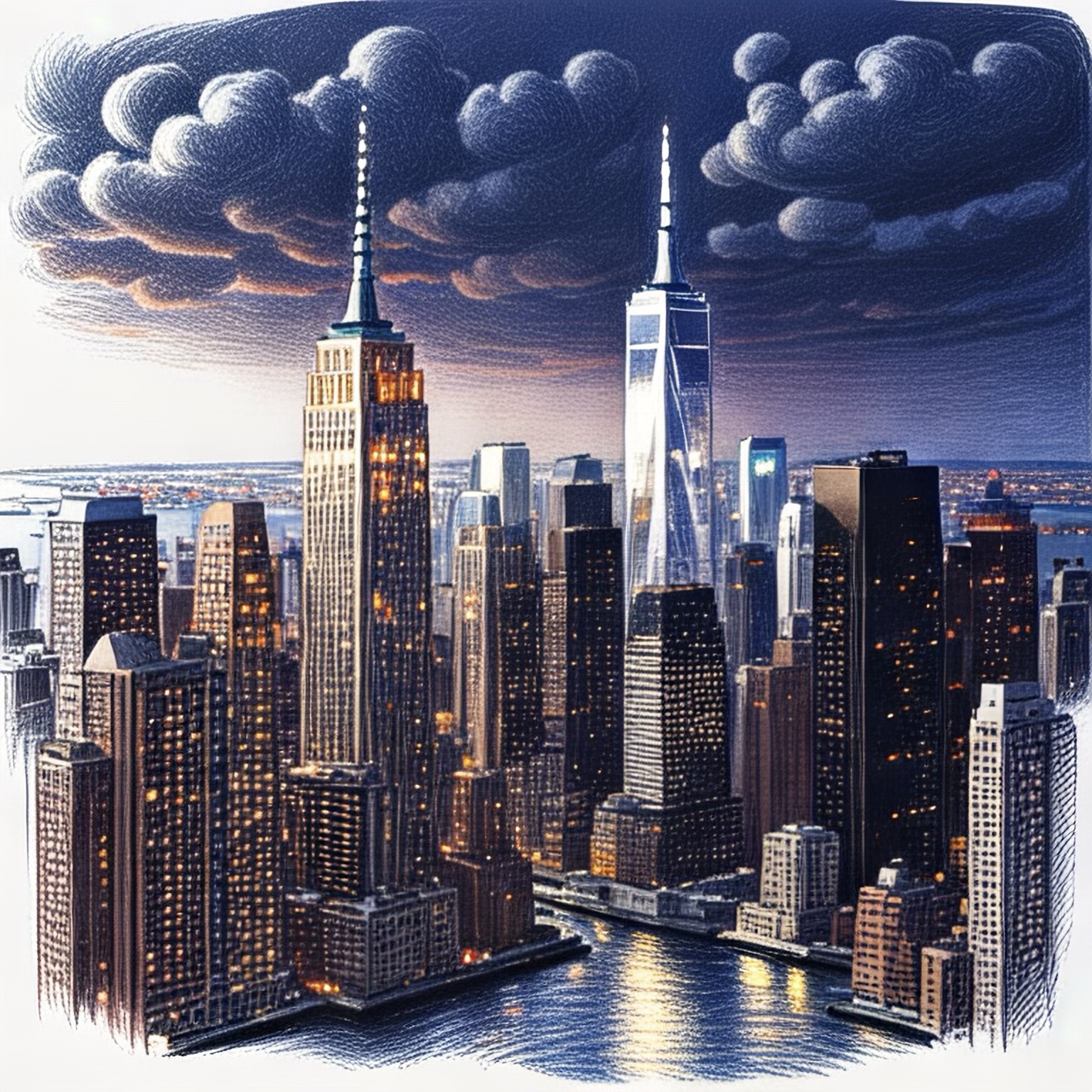
A Vision for the Ultimate Walkable, Transit-Oriented, Nature-Integrated Island
By an Urban Planner Dreaming Big – January 2026
What if we could redesign Manhattan Island from the ground up today, armed with everything we’ve learned from the 1811 Commissioners’ Plan, modern climate science, and the world’s best pedestrian-friendly cities? No cars dominating streets. No endless traffic. Instead: vibrant, green avenues where people walk, cycle, and ride seamless transit; streets alive with trees, benches, play areas, and neighbours chatting; a city that’s cooler, quieter, healthier, and far more equitable.
This isn’t fantasy—it’s a synthesis of proven ideas from Copenhagen’s bicycle paradise, Barcelona’s superblocks, Amsterdam’s car-lite canals, and emerging 2025–2026 projects like NYC’s own greener corridors and pedestrian-priority redesigns. Here’s how I’d build the greenest, most walkable Manhattan possible.
1. The Hierarchy: People Over Everything
From day one, enforce a clear priority order:
- Pedestrians & walkers — the kings and queens of the street.
- Cyclists, e-bikes, scooters — fully protected and connected.
- Subways, trams, light rail, regional trains — the high-capacity spine.
- Delivery, emergency & service vehicles — restricted and timed.
- Private cars — minimised or banned in most areas.
Goal: 70–80% of trips by foot, bike, or transit. Private car use drops below 10%, slashing congestion, pollution, and road deaths.
2. A Finer, Greener Grid with Superblock Inspiration
The classic Manhattan grid is brilliant for navigation and density—but its long blocks and wide car lanes make walking feel punishing. My version evolves it:
- Block size: 50–80 m × 150–250 m (finer than today’s ~60 m × 240 m). Shorter blocks mean shorter walks, more shopfronts, safer crossings, and natural traffic calming.
- Superblock logic (Barcelona-style): Group 3×3 or 4×4 blocks into “superblocks” where interior streets become car-free or woonerf shared spaces — raised tables, 5–10 km/h speeds, priority to people on foot. Cars only for access/loading at crawling pace. Interiors fill with pocket parks, playgrounds, community gardens, outdoor cafés, and seating.
- Green avenues (north–south every 200–300 m): 35–50 m wide corridors with:
- 8–12 m sidewalks each side (wide enough for outdoor dining, benches, trees).
- Central linear park/median with bioswales, rain gardens, native plants, and dedicated tram/light-rail tracks.
- Protected bike lanes (bidirectional or separated).
- Minimal car lanes (1–2 for delivery/emergency only, often reversible).
- Transit boulevards & diagonals: 2–4 angled green boulevards cut across the grid for shorter trips and visual drama. Fully dedicated to trams/light rail + subway entrances every 300–400 m. Cars banned or heavily restricted.
- Car-free neighbourhoods: 40–60% of the island (e.g., expanded Greenwich Village/SoHo model, full Midtown core, Lower Manhattan) permanently car-free. Bollards and removable posts enforce access only for emergencies.
3. Nature Everywhere: 25–30% Green Space
Manhattan today has ~14% public open space (including Central Park). My plan doubles that:
- Distributed green: Pocket parks, plazas, and play areas every 300 m walking radius (~5-minute walk).
- Flagship Central Green: ~4 km² asymmetric park (e.g., along the Hudson corridor) with meadows, wetlands, forests, and floodable zones for resilience.
- Linear parks & high lines: Elevated or at-grade greenways over rail lines, along waterfronts, and as “green seams” connecting neighbourhoods.
- Street-level greening: 50%+ tree canopy target. Every street gets continuous tree pits, structural soil, permeable paving, and bioswales capturing 90%+ stormwater.
- Building rules: Mandatory green roofs (70–100% coverage on large buildings), living walls, and biodiversity features.
- Blue-green infrastructure: Restored tidal edges, daylighted streams in the north, floodable parks along rivers for sea-level rise adaptation.
This creates massive heat-island reduction, cleaner air, biodiversity corridors, and natural cooling—vital for a warming world.
4. Transit Backbone: Subways, Trams, Trains First
Build transit before most buildings:
- Subway grid: Stations no more than 400 m apart in dense areas. Express/local tracks on major avenues. Fully electric, high-frequency (2–3 min headways), quiet, and accessible.
- Surface trams/light rail: Dedicated lanes on green avenues and diagonals. Low-floor, frequent (every 4–6 min), modern, and integrated with bikes/pedestrians.
- Regional rail: Expanded through-running stations (super-Penn Station equivalent) linking seamlessly to surrounding boroughs and beyond.
- Multi-modal hubs: Every major station surrounded by plazas, secure bike parking, e-scooter docks, and ground-floor retail.
5. Land Use & Buildings That Serve the Street
- Mixed-use everywhere: Shops, cafés, offices, and homes stacked vertically. Active ground floors mandatory—no blank walls.
- Form-based zoning: Focus on building shape (setbacks for light/air, human-scale bases) rather than rigid use separation.
- No parking minimums; strict maximums near transit.
- Density bonuses for affordable housing, public plazas, green roofs, and community spaces.
- Height strategy: Towers near transit hubs (with setbacks), stepping down to 6–12 storey mid-rises elsewhere for walkable scale.
Expected Wins
- Walkability: 95–100% of residents within 5–10 min walk of transit, parks, and essentials.
- Health & equity: Quieter, safer streets; lower pollution; more physical activity; better access for all ages and abilities.
- Climate: 30–50% lower transport emissions per capita; major cooling from greening; flood resilience.
- Vibrancy: Streets become living rooms—people linger, children play, local economies thrive.
This Manhattan would blend the density and energy of today’s island with the human scale of Copenhagen, the green ambition of Vilnius (2025 European Green Capital), and the traffic-taming power of Barcelona’s superblocks. It would be intensely urban yet profoundly green and people-centred.
The technology and knowledge exist. The question is: do we have the political will to prioritise walkers, transit riders, and nature over the private car?
What part of this vision excites (or concerns) you most? Would you want to see a superblock neighbourhood zoomed in, or cost/timeline estimates? 🏙️🌳🚶♂️
Leave a Reply
You must be logged in to post a comment.