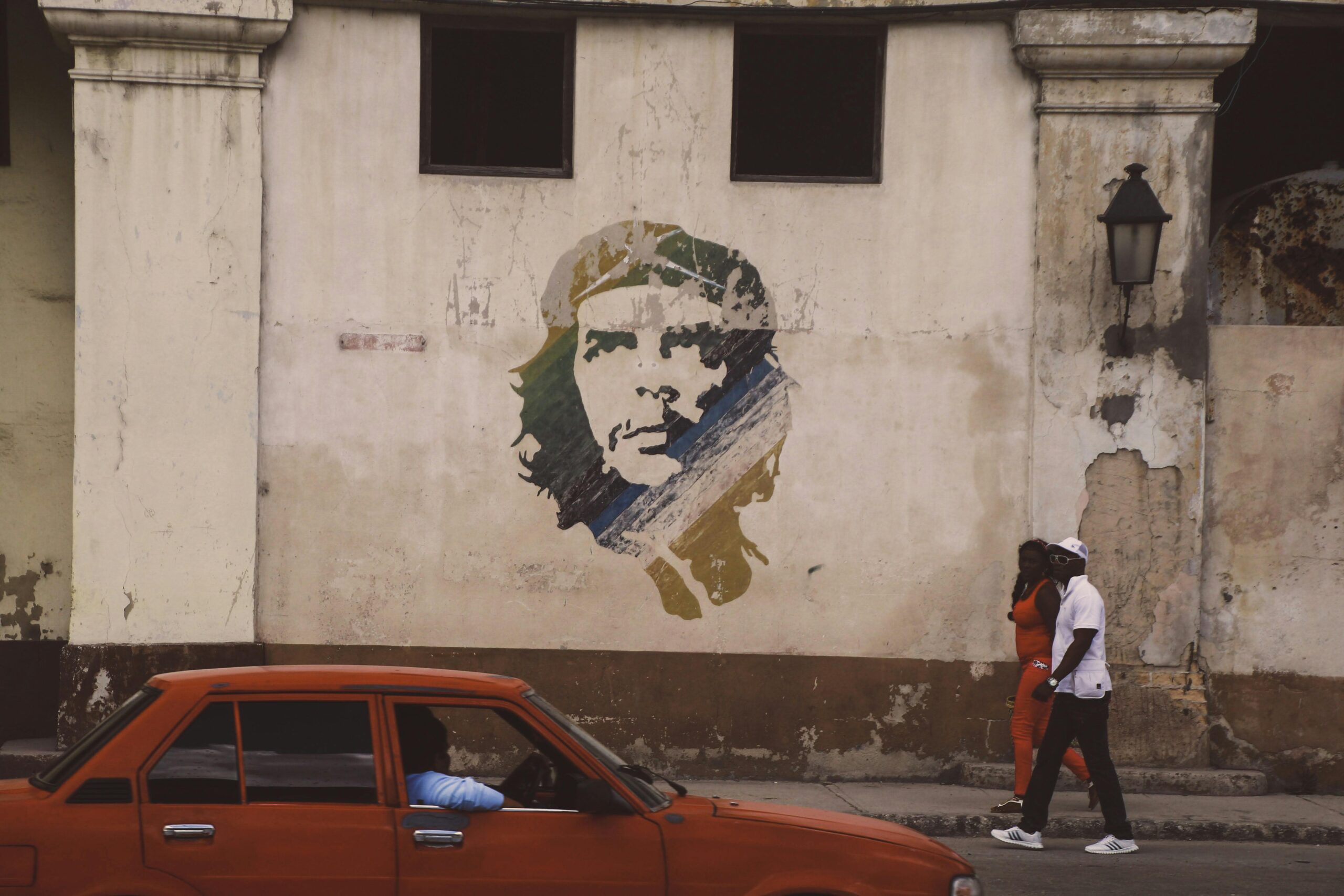
Ernesto “Che” Guevara is one of the most mythologized figures of the 20th century — often portrayed (especially in leftist circles, street art, and popular culture) as a selfless idealist, anti-imperialist martyr, and almost saint-like symbol of rebellion against oppression. However, historical evidence from multiple sources, including eyewitness accounts, his own writings, and declassified records, shows a far more troubling record that disqualifies him from any “saintly” status.
Here are the main reasons why Che Guevara should not be viewed as a saint or purely heroic figure:
1. Direct role in summary executions and revolutionary tribunals
After the Cuban Revolution’s victory in 1959, Guevara was appointed commander of La Cabaña fortress prison (January–June 1959). In this role, he oversaw revolutionary tribunals that tried (and often quickly executed) people accused of crimes under the Batista regime, as well as perceived counter-revolutionaries.
- Estimates of executions at La Cabaña under his command range from hundreds (commonly cited figures are in the 200–500 range during the early months of 1959 across revolutionary tribunals, with Guevara presiding over many).
- These were frequently summary proceedings — lacking due process, fair trials, independent evidence, or right to appeal in many cases.
- Witnesses (including the prison chaplain Javier Arzuaga) reported that executions included not only Batista officials/torturers, but also journalists, businessmen, merchants, and others loosely accused.
- Guevara himself described revolutionaries needing to become “a cold killing machine motivated by pure hate” and stated that “the victory of socialism is well worth millions of atomic victims.”
These actions are widely regarded by critics as extrajudicial killings and serious human rights violations, even if one accepts that some executed individuals were guilty of real crimes under the prior dictatorship.
2. Authoritarian ideology and disregard for dissent
Guevara was uncompromising in his belief that revolution required terror and repression against “enemies.” He helped establish Cuba’s one-party state, crushed independent unions and political opposition, and advocated forced labor camps (inspired by Soviet/Chinese models).
- He played a role in early repressive institutions, viewing judicial norms as bourgeois weaknesses.
- His vision of the “new socialist man” left little room for individual freedoms, minority rights, or pluralism.
3. Homophobic attitudes and policies
Guevara referred to gay men as “sexual perverts” and saw homosexuality as incompatible with revolutionary virtue. While the most notorious UMAP forced labor camps (Military Units to Aid Production) for gay men, religious dissidents, and others began after his main period of influence (peaking 1965–1968), he helped lay the ideological groundwork for viewing non-conforming sexuality as counter-revolutionary “decadence.”
Cuba’s broader anti-gay policies in the 1960s (including internment and “reeducation”) aligned with the hyper-masculine revolutionary ethos Guevara promoted.
4. Racist statements in his early writings
In The Motorcycle Diaries (his pre-revolutionary travel journal), Guevara made derogatory remarks about racial groups:
- He described Black people as “indolent and a dreamer; spending his meager wage on frivolity or drink.”
- He referred to some as “magnificent examples of the African race who have maintained their racial purity thanks to their lack of an affinity with bathing.”
- He also stereotyped Mexicans as “a band of illiterate Indians.”
While some defenders argue these were youthful impressions that he later outgrew (and he fought alongside diverse groups in Cuba and Africa), the statements reflect prejudiced views common in his era but jarring against his later anti-imperialist image.
5. Military failures and fanaticism
Beyond Cuba, Guevara’s guerrilla campaigns in the Congo (1965) and Bolivia (1966–1967) ended in disaster — partly due to his rigid ideology, poor preparation, and failure to win local support. His insistence on violent export of revolution often ignored local realities and cost lives without achieving lasting change.
In summary
Che Guevara was a committed revolutionary who helped overthrow a brutal dictatorship and inspired anti-colonial struggles worldwide. But he was also a fanatic who enthusiastically embraced authoritarian violence, oversaw executions without fair process, held prejudiced views on race and sexuality, and helped build a repressive system.
The saint-like image — the romantic rebel who died for the poor — is a heavily curated myth that erases victims of the firing squads, political prisoners, and those who suffered under the regimes he supported. Like many historical figures, he was neither pure hero nor cartoon villain, but the evidence of his actions and beliefs makes any “sainthood” deeply inappropriate.
Camp Che
Che Guevara and “concentration camps” in Cuba are frequently linked in criticisms of his legacy, particularly regarding forced labor systems and early repressive institutions. While Che did not directly run the most infamous UMAP camps (which peaked after his main involvement in Cuba), he played a foundational role in establishing Cuba’s system of labor camps and ideological repression that targeted “counter-revolutionaries,” including homosexuals, religious groups, and political dissidents.
Key Establishments and Che’s Involvement
- Guanahacabibes Camp (1960–1961)
This was the first major labor/rehabilitation camp in revolutionary Cuba, explicitly established by Che Guevara in his role as head of the Ministry of Industries.
- Located in the Guanahacabibes Peninsula, it was officially called the “Uvero Quemado Rehabilitation Center.”
- It targeted bureaucrats, managers, and others accused of inefficiency, absenteeism, or “counter-revolutionary” attitudes — often sending them for hard labor as “re-education.”
- Historians describe it as extra-legal (outside normal judicial processes) and a precursor to later, larger forced labor systems. Some sources label it a prototype for concentration-camp-style punishment in Cuba.
- Che defended the concept, arguing that revolutionary discipline required harsh measures against those who failed the new socialist order.
- Military Units to Aid Production (UMAP) Camps (1965–1968)
These were the most notorious agricultural forced labor camps, often called “concentration camps” by critics due to their coercive nature, harsh conditions, torture reports, and targeting of specific groups.
- An estimated 25,000–35,000 people passed through them (some sources cite up to 50,000 over time, including extensions).
- Inmates included: gay men (seen as “deviant” and incompatible with the revolutionary “new man”), Jehovah’s Witnesses and other religious conscientious objectors, political dissidents, “anti-socials,” and those evading military service.
- Conditions involved brutal physical labor, beatings, simulated executions, hormone treatments (to “cure” homosexuality), and high rates of abuse, illness, and some deaths.
- The camps were proposed by Fidel Castro and implemented under Raúl Castro, inspired by Soviet/Bulgarian models. They began in late 1965 — after Che had largely left Cuba for international missions (Congo in 1965, Bolivia in 1966–67).
- Che’s indirect role: His writings (e.g., Socialism and Man in Cuba, 1965) heavily promoted the idea of forging a “new socialist man” through discipline, moral vigilance, and elimination of “bourgeois” weaknesses — including views on homosexuality as a moral failing. This ideological framework helped justify the persecution. Che also contributed to the broader culture of revolutionary machismo and repression of non-conforming identities.
Context and Debate
- Defenders argue Che was not directly involved in UMAP (he was abroad by then), and early camps like Guanahacabibes were about labor discipline, not genocide-style concentration camps. Some claim participation was semi-voluntary or corrective rather than purely punitive.
- Critics (including survivor testimonies, historians like Jacobo Machover, and organizations like Cuba Archive) view these as part of a continuum of repression Che helped initiate, comparing them to gulags or Franco-era camps. The term “concentration camps” is used due to mass internment without trial, forced labor, and targeting based on identity/politics.
- Che’s direct responsibility lies more with summary executions at La Cabaña (55–200+ documented deaths under his command in 1959) and ideological groundwork for later repression than day-to-day UMAP operations.
In short, while Che Guevara did not personally oversee the UMAP camps, he helped create the first Cuban labor camp (Guanahacabibes) and promoted the authoritarian ideology that enabled the broader system of forced labor and internment for “undesirables.” These institutions remain one of the darkest chapters of the Cuban Revolution, often cited to challenge his saint-like image.
Leave a Reply
You must be logged in to post a comment.