Here is a well-structured blog post based on the viral X post by @bowang87 (from late 2025 or early 2026 context) and verified recent developments surrounding Dr. Mariangela Hungria’s groundbreaking work.
In an era where agriculture faces mounting pressure from climate change, high input costs, and environmental concerns, one scientist’s decades of quiet microbiology research has quietly delivered one of the most impactful sustainability wins in modern farming.
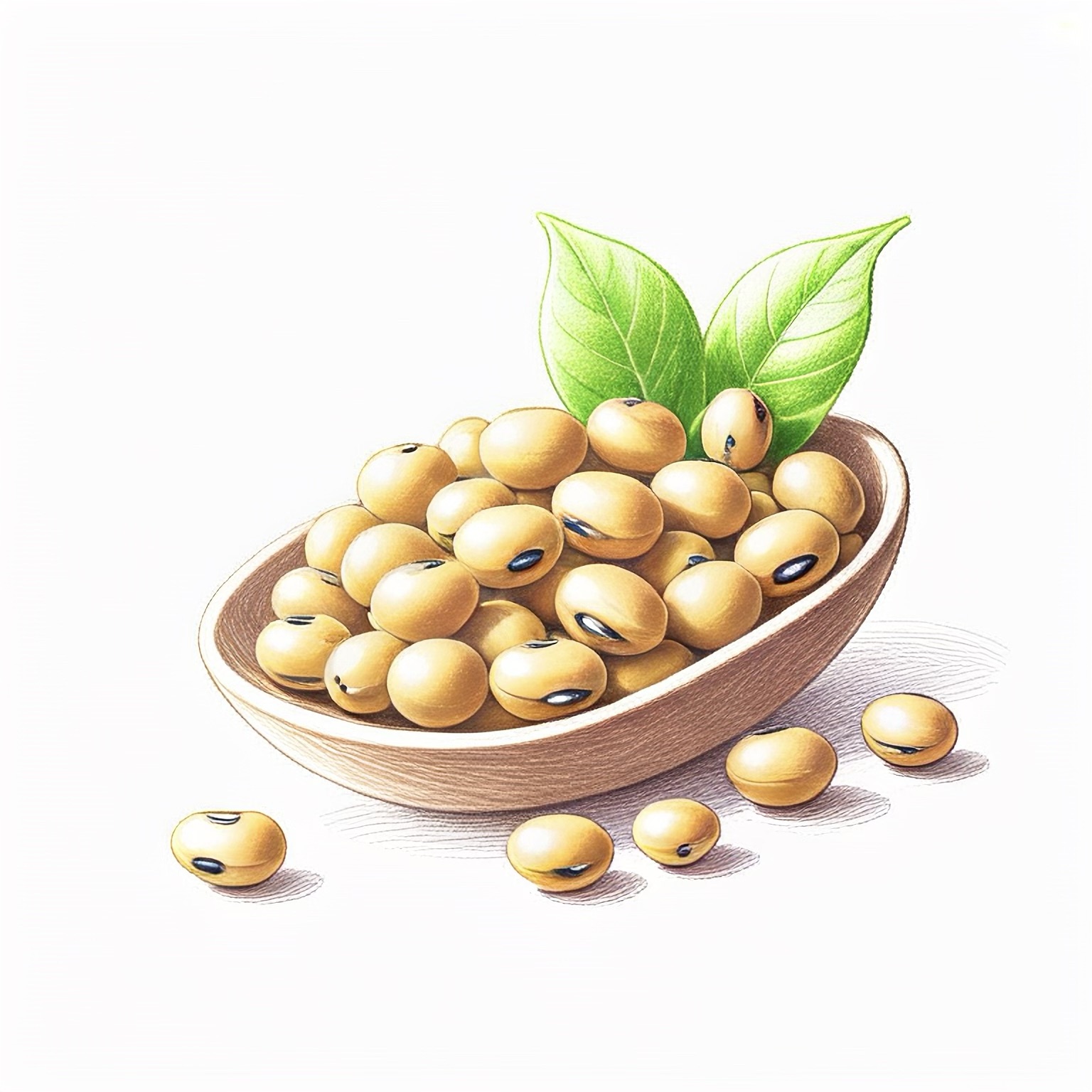
Dr. Mariangela Hungria, a Brazilian microbiologist at Embrapa (the Brazilian Agricultural Research Corporation), was awarded the 2025 World Food Prize — often called the “Nobel Prize for food and agriculture” — for her pioneering advancements in biological nitrogen fixation (BNF). Her work has transformed how Brazil grows soybeans and other crops, turning the country into the world’s leading soybean exporter while dramatically reducing reliance on synthetic fertilizers.
The Core Innovation: Harnessing Nature’s Nitrogen Factory
Legumes like soybeans can form symbiotic relationships with rhizobia bacteria (primarily Bradyrhizobium species). These microbes live in root nodules and convert abundant atmospheric nitrogen (N₂) into plant-usable forms — a process called BNF.
Hungria’s key contributions over 40+ years include:
- Developing highly effective, adapted strains of rhizobia and co-inoculants (combining Bradyrhizobium with plant growth-promoting bacteria like Azospirillum brasilense).
- Proving — contrary to earlier skepticism from North American and European research — that annual reinoculation of soybeans delivers consistent yield increases (averaging ~8%) even in established fields.
- Creating low-cost microbial inoculants applied to seeds, replacing most or all synthetic nitrogen fertilizer needs for soybeans.
Today, ~85% of Brazil’s soybean area uses these inoculation practices, covering tens of millions of hectares.
Staggering Economic & Environmental Numbers
The scale is remarkable. Consider these impacts tied to BNF in Brazilian soybeans (drawing from peer-reviewed estimates and Embrapa data around 2019–2025 periods, with continued expansion):
- Cost savings: Inoculants cost farmers roughly $2–3 per hectare vs. $40–70+ for equivalent synthetic N fertilizer. This has generated billions in annual savings nationwide.
- One rigorous study estimated replacing urea with BNF saved ~$15.2 billion USD in a single recent season across Brazil’s soybean crop.
- Farmer profit from inoculation/co-inoculation practices alone reached hundreds of millions of dollars yearly.
- Yield & production boost: Brazil went from importing soybeans to becoming the #1 global exporter (surpassing the U.S.), with high yields achieved without nitrogen fertilizer applications on most acreage.
- Climate benefit: By avoiding synthetic nitrogen fertilizer production and use (a major source of nitrous oxide emissions and upstream CO₂ from the Haber-Bosch process), BNF has averted massive greenhouse gas emissions.
- Estimates range from 183–230+ million metric tons of CO₂-equivalent avoided in peak years — comparable to taking tens of millions of cars off the road annually.
Why This Matters Beyond Brazil
Hungria’s technologies have expanded beyond soybeans to maize, wheat, common beans, rice, and even pastures (with new multifunctional inoculants boosting forage biomass by ~22% while improving nutrient uptake and fertilizer efficiency).
This Global South-led model shows how microbiology can deliver:
- Lower production costs for farmers (especially in developing regions).
- Reduced import dependence on volatile fertilizer markets (Brazil still imports much of its remaining NPK, but BNF has cut nitrogen needs sharply).
- Lower environmental footprint without sacrificing output.
Yet challenges remain — not all farmers have adopted the practices fully, and broader application to non-legume crops is still evolving. Continued public investment in bio-inputs (like Brazil’s National Bio-inputs Program) will be key.
Final Thought
Dr. Hungria’s recognition highlights a powerful truth: sometimes the biggest agricultural revolutions come not from new machinery or genetics alone, but from understanding and scaling tiny, invisible allies already present in healthy soils.
In a world searching for scalable, low-carbon ways to feed 10 billion people, the story of Brazilian soybeans and nitrogen-fixing bacteria deserves far more attention.
Sources include official World Food Prize announcements (2025 laureate page), Embrapa publications, peer-reviewed studies on BNF economics in Brazil, and related reporting from 2025–2026.
What do you think — could similar microbial strategies work at scale in other major cropping systems (e.g., corn in the U.S. Midwest or rice in Asia)? Share your thoughts below. 🌱