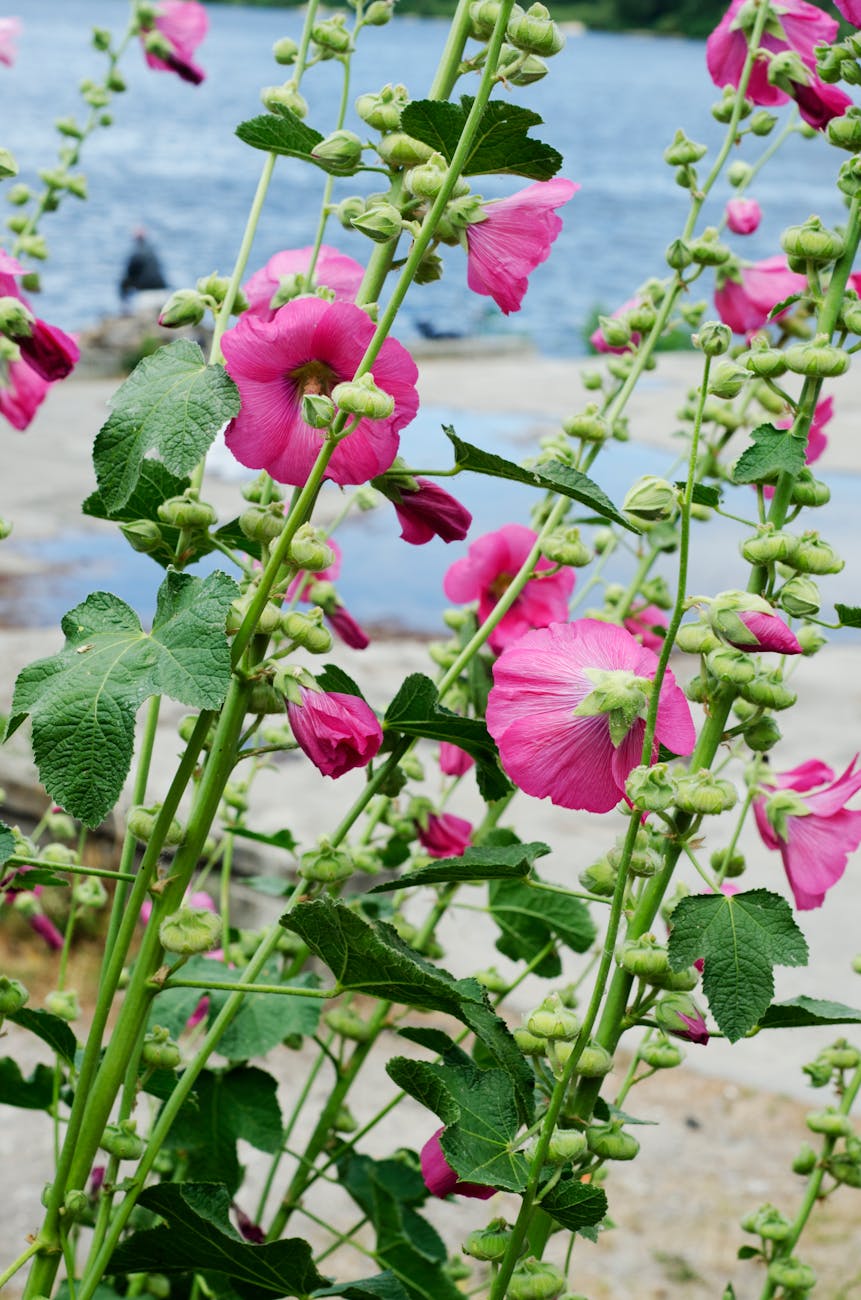
🔍 is a common fungal disease caused by Puccinia malvacearum, and it particularly affects hollyhocks (Alcea spp.) and other members of the mallow family.
Symptoms
- Orange-brown pustules on the undersides of leaves.
- Yellow spots on the upper surface.
- Leaves may become distorted, wither, and fall prematurely.
- Can also affect stems and flower stalks in severe cases.
⚠️ Why It’s a Problem
- Weakens the plant, reducing flowering and vigour.
- Highly contagious — spreads via wind, rain splash, and contaminated tools or debris.
- Often reappears year after year unless actively controlled.
✅ Control & Prevention
1. Cultural Controls
- Remove infected leaves as soon as seen (dispose in household waste, not compost).
- Cut back plants hard in autumn and dispose of all debris.
- Avoid overhead watering.
- Improve air circulation by spacing plants and thinning stems.
2. Resistant Varieties
- Some hollyhocks and closely related species show more resistance (e.g. Alcea rugosa or Alcea ficifolia).
- Avoid over-hybridised strains which may be more susceptible.
3. Crop Rotation
- Don’t plant hollyhocks in the same spot every year.
4. Fungicides (UK)
- There are no fungicides explicitly approved for amateur use against hollyhock rust in the UK, but:
- General-purpose fungicides for ornamentals (e.g. based on myclobutanil or tebuconazole) may help if labelled for rusts.
- Use as a preventative at the first signs in spring.
- Always follow label instructions and check legal approval.
5. Organic/Non-chemical Options
- Regularly inspect and prune early.
- Neem oil, sulphur sprays, or homemade baking soda solutions may help reduce spread, though effectiveness varies.
- Companion planting with onions or garlic may slightly deter fungal spread (anecdotal).
🧤 Autumn Cleanup
- Vital to reducing re-infection:
- Remove all old stems and leaves.
- Don’t compost infected material.
- Mulch in spring to cover any spores in soil.
Leave a Reply
You must be logged in to post a comment.