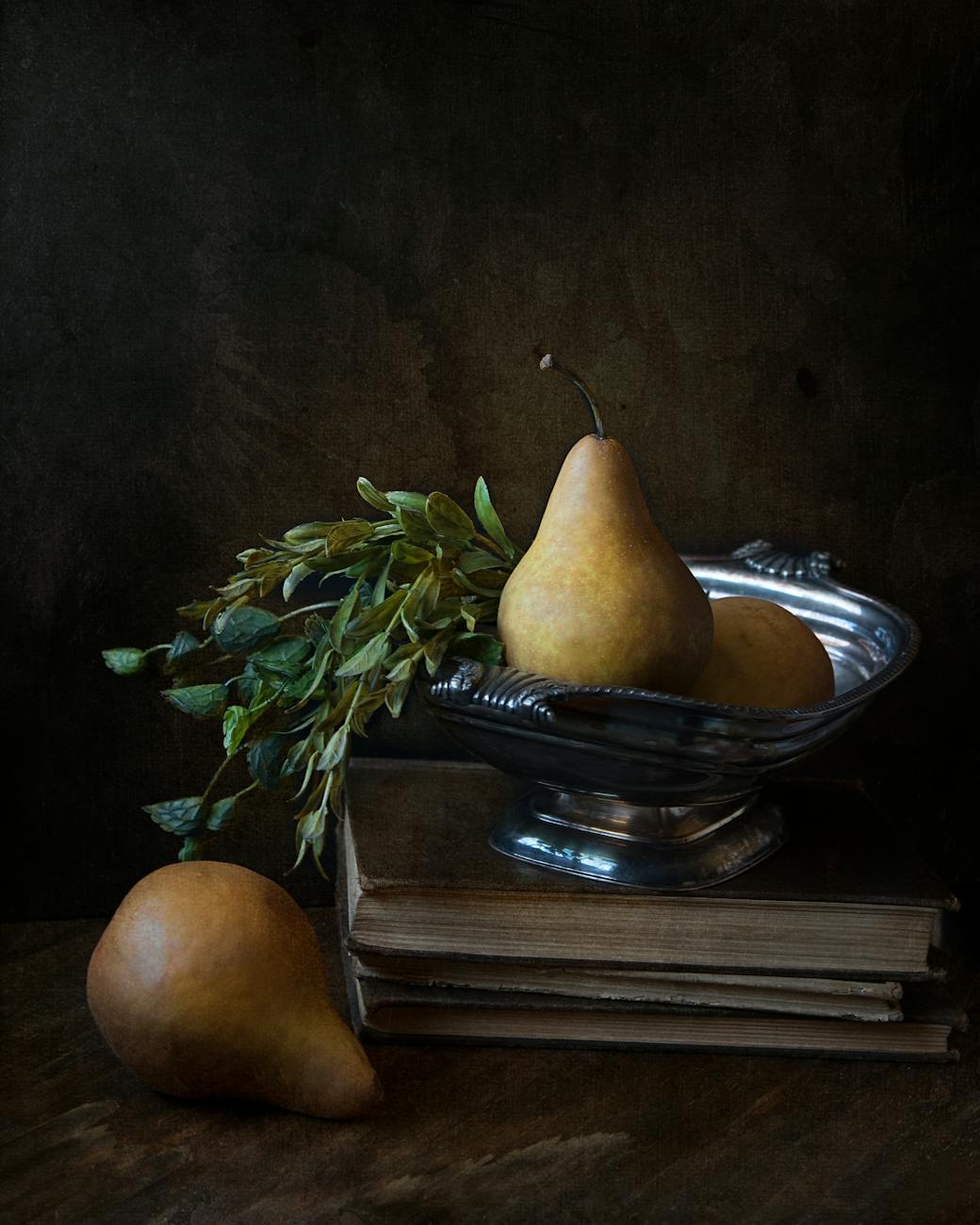
Fermented Pears (Lacto-Fermentation)
Ingredients & Equipment
- Pears (firm, slightly underripe work best)
- Salt (non-iodized, 2–3% brine by weight)
- Optional flavorings:
- Cinnamon sticks
- Vanilla bean
- Ginger slices
- Star anise or cloves
- Filtered water (chlorine-free)
- Fermentation weights (or a small, clean stone)
- Mason jar or fermentation crock
Steps
- Prepare Pears
- Wash and peel (optional—skin can add texture).
- Cut into slices, chunks, or leave whole if small (e.g., Seckel pears).
- Toss with a bit of lemon juice to prevent browning.
- Make Brine
- Dissolve 2–3% salt in water (e.g., 20–30g salt per 1L water).
- For a dry brine: Toss pear pieces with 2% salt by weight (no water).
- Pack the Jar
- Add pears and optional spices to a clean jar.
- Cover with brine, leaving 1–2 inches of headspace.
- Use a fermentation weight to keep pears submerged.
- Ferment
- Cover with a lid (loosely sealed) or a breathable cloth.
- Store at 60–75°F (15–24°C) for 3–10 days.
- Burp the jar daily to release gases.
- Taste after 3 days—ferment longer for tangier flavor.
- Store
- Once fermented to taste, seal tightly and refrigerate (lasts 1–6 months).
Fermented Pear Variations
- Honey Fermented Pears: Substitute salt brine with raw honey (1:1 honey to water). Ferment 1–2 weeks.
- Pear Kvass: Chop pears, add to water with a splash of whey or ginger bug, and ferment 2–3 days for a probiotic drink.
- Spiced Ferment: Add cardamom, juniper berries, or black peppercorns for complexity.
Safety Notes
- Ensure pears stay submerged to prevent mold.
- Discard if you see fuzz, strong off-odors, or discoloration.
- Fermented pears will soften and develop a tangy, effervescent flavor—great for salads, cheese boards, or as a condiment.
For more ideas, check out fermentation guides like The Art of Fermentation (Sandor Katz) or Wild Fermentation.
Fermenting pears is a unique preservation method that enhances their flavor, adds probiotics, and extends shelf life. Here’s how to do it:
Fermented Pears (Lacto-Fermentation)
Ingredients & Equipment
- Pears (firm, slightly underripe work best)
- Salt (non-iodized, 2–3% brine by weight)
- Optional flavorings:
- Cinnamon sticks
- Vanilla bean
- Ginger slices
- Star anise or cloves
- Filtered water (chlorine-free)
- Fermentation weights (or a small, clean stone)
- Mason jar or fermentation crock
Steps
- Prepare Pears
- Wash and peel (optional—skin can add texture).
- Cut into slices, chunks, or leave whole if small (e.g., Seckel pears).
- Toss with a bit of lemon juice to prevent browning.
- Make Brine
- Dissolve 2–3% salt in water (e.g., 20–30g salt per 1L water).
- For a dry brine: Toss pear pieces with 2% salt by weight (no water).
- Pack the Jar
- Add pears and optional spices to a clean jar.
- Cover with brine, leaving 1–2 inches of headspace.
- Use a fermentation weight to keep pears submerged.
- Ferment
- Cover with a lid (loosely sealed) or a breathable cloth.
- Store at 60–75°F (15–24°C) for 3–10 days.
- Burp the jar daily to release gases.
- Taste after 3 days—ferment longer for tangier flavor.
- Store
- Once fermented to taste, seal tightly and refrigerate (lasts 1–6 months).
Fermented Pear Variations
- Honey Fermented Pears: Substitute salt brine with raw honey (1:1 honey to water). Ferment 1–2 weeks.
- Pear Kvass: Chop pears, add to water with a splash of whey or ginger bug, and ferment 2–3 days for a probiotic drink.
- Spiced Ferment: Add cardamom, juniper berries, or black peppercorns for complexity.
Safety Notes
- Ensure pears stay submerged to prevent mold.
- Discard if you see fuzz, strong off-odors, or discoloration.
- Fermented pears will soften and develop a tangy, effervescent flavor—great for salads, cheese boards, or as a condiment.
For more ideas, check out fermentation guides like The Art of Fermentation (Sandor Katz) or Wild Fermentation.
Leave a Reply
You must be logged in to post a comment.