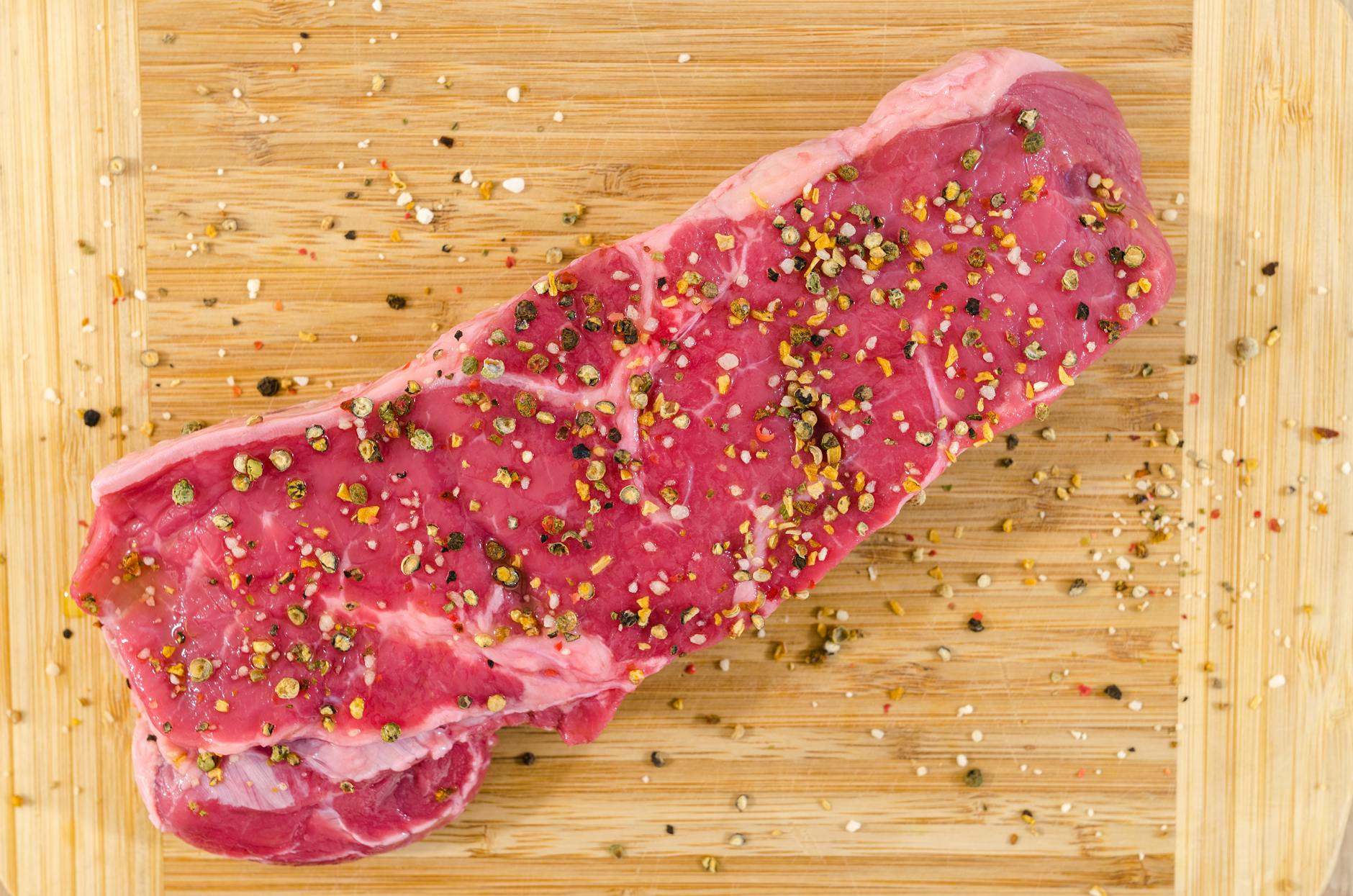
Scroll through any health forum these days, and you’ll find a heated debate: is our true, natural diet a meat-heavy carnivore feast or a plant-based paradise? Both sides often point to the same evidence—human evolution—to make their case.
So, who’s right? The answer is far more fascinating than a simple binary choice. Let’s take a trip back in time to see what our ancestors really ate.
The Game-Changer: When We Embraced Meat
There’s a powerful argument that meat is what made us human. For millions of years, our early ancestors, like Australopithecus, munched on a primarily plant-based diet, similar to modern apes. They had huge guts to ferment all that fibrous vegetation and relatively small brains.
Then, around 2.5 million years ago, something shifted. The climate changed, forests receded, and grasslands expanded. Our genus, Homo, emerged, and with it came a new behavior: eating meat.
This wasn’t just a minor menu update; it was a evolutionary revolution.
- Brain Food: Animal fat and protein are incredibly energy-dense and provided the raw materials to build a larger, more complex brain. Our brain is a energy hog, and meat offered the calorie surplus needed to fuel it.
- Gut Reaction: As our brains grew, our guts shrank. Why? Because metabolically expensive tissue like the gut wasn’t needed as much. Pre-digested, easy-to-process meat requires a less complex digestive system than raw leaves and tubers.
- Tools and Society: This shift is etched in stone—literally. The first stone tools appear around this time, used for butchering carcasses. Hunting and sharing meat likely spurred the development of complex social structures, communication, and cooperation.
Without this move toward carnivory, we would not be the intelligent, technological species we are today.
The Plot Twist: The Power of the Cooked Tuber
But the story doesn’t end with the triumphant hunter. There’s a crucial, often-overlooked chapter: the invention of cooking.
Harvard anthropologist Richard Wrangham argues that cooking was the true evolutionary trigger. The control of fire allowed us to do something extraordinary: unlock the energy in both meat and plants.
Think about a raw sweet potato or a tough piece of wild game. Cooking:
- Gelatinizes starches in plants, making them easy to digest.
- Denatures proteins in meat, doing the same.
- Dramatically increases the net energy we can extract from all food.
This theory suggests that while meat was important, the ability to cook starchy tubers and roots provided a reliable, stable energy base that hunting unpredictable large game could not. Our ancestors were likely brilliant gatherers, supplementing their diet with everything they could find: nuts, fruits, insects, eggs, and yes, cooked tubers.
So, What’s the “Natural” Human Diet?
The evidence points to one clear conclusion: we are the ultimate opportunistic omnivores.
Our biology screams this truth:
- We have canine teeth for meat, but also flat molars for grinding plants.
- We produce amylase in our saliva to break down starches.
- We have a digestive system shorter than a gorilla’s but longer than a lion’s—perfect for a mixed diet.
The notion of a purely carnivorous past is a simplification. While some populations (like the Inuit) thrived on mostly animal products due to their environment, this was the exception, not the rule. For most of our history, we ate whatever was nutritious and available. Our evolutionary superpower isn’t specialization; it’s dietary flexibility.
The Bottom Line for Your Plate
Arguing over whether meat or plants are “more natural” misses the point. The truly “unnatural” parts of our modern diet are the processed foods, refined sugars, and seed oils that our bodies have no evolutionary context for.
Instead of choosing a tribe, embrace your inner omnivore. Build your diet around whole, unprocessed foods: high-quality meats, fish, eggs, and a colorful array of cooked and raw plants. That’s the true ancestral diet—one of variety, adaptability, and nourishment.
What do you think? Does this evolutionary perspective change how you view your plate? Share your thoughts in the comments below!
Leave a Reply
You must be logged in to post a comment.