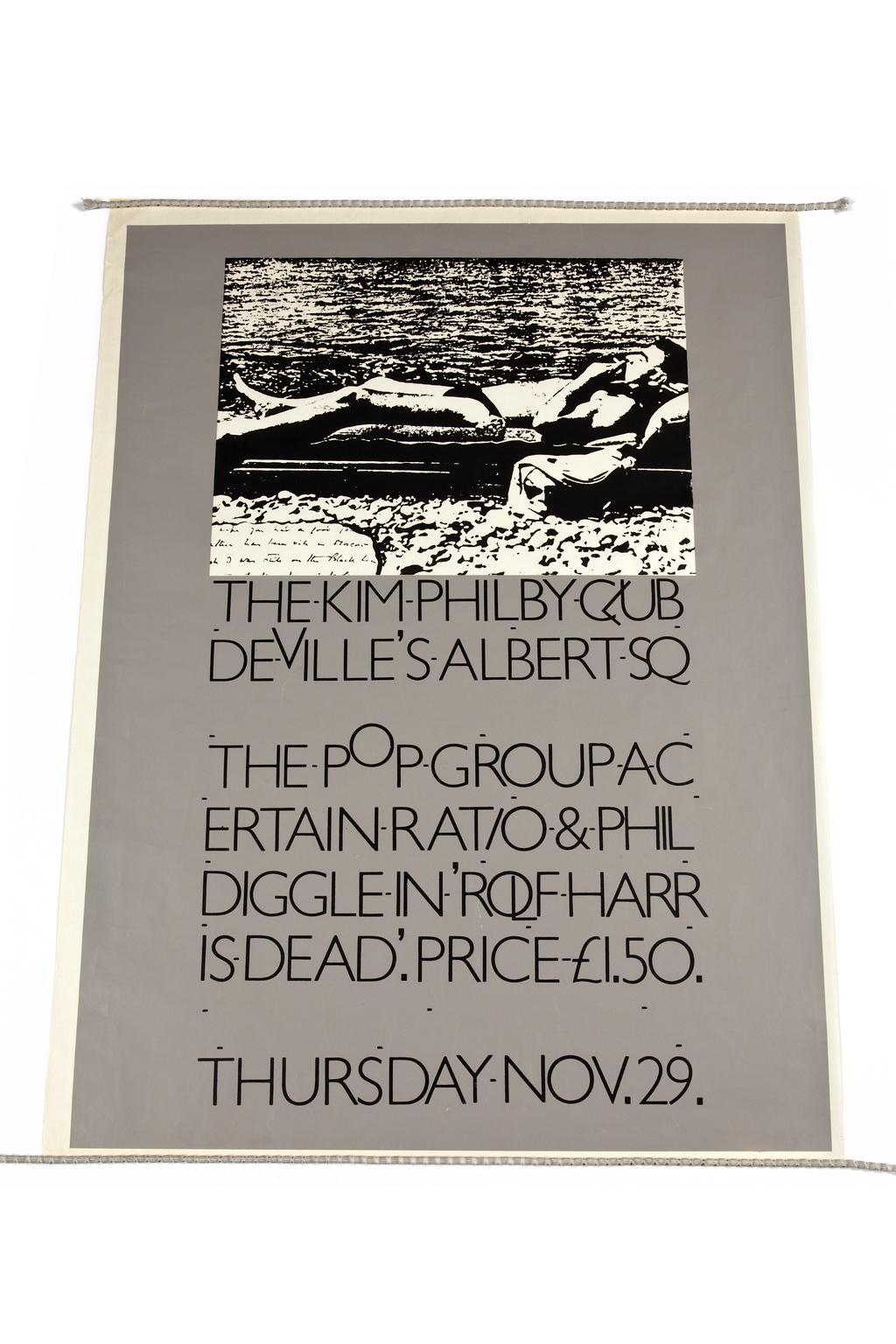
Here is a brief biography of Kim Philby, one of the most infamous double agents in history.
Harold Adrian Russell “Kim” Philby (January 1, 1912 – May 11, 1988) was a high-ranking British intelligence officer who, for nearly three decades, served as a spy for the Soviet Union. He was the most successful member of the Cambridge Five, a ring of spies who betrayed Western secrets to the Soviets before and during the Cold War.
Early Life and Recruitment (1912-1934)
- Birth and Nickname: Born in British India to noted Arabist and colonial administrator St. John Philby. His nickname “Kim” came from Rudyard Kipling’s novel Kim, about a boy involved in the “Great Game” of espionage in India—a famously ironic foreshadowing.
- Education at Cambridge: He studied at Trinity College, Cambridge, from 1929 to 1933. It was here, during a period of widespread disillusionment with capitalism and fascism’s rise, that he became convinced of the virtues of Communism.
- Recruitment by the Soviets: In 1934, shortly after leaving Cambridge, he was formally recruited by Soviet intelligence (the NKVD, forerunner of the KGB). His handler was Arnold Deutsch, who identified Philby and his circle as ideal long-term penetration agents.
Rise in British Intelligence (1940-1949)
Philby’s genius was his ability to position himself at the very heart of the British establishment.
- World War II: After a brief stint as a journalist covering the Spanish Civil War (where he won Franco’s favor, aiding his cover), he joined Britain’s Secret Intelligence Service (MI6) in 1940. He rose rapidly, eventually becoming head of Section IX, which focused on anti-Soviet and communist counter-espionage. This gave him unrestricted access to the entire British strategy against his own Soviet masters.
- The Greatest Treasons: During this period, he betrayed countless operations and individuals:
- He alerted Moscow to Allied plans to invade Nazi-occupied Europe via Greece and the Balkans, leading Stalin to suspect a Western plot to leave the USSR bearing the brunt of the war.
- He compromised the Venona project, a critical Allied effort to decrypt Soviet intelligence traffic.
- Most devastatingly, he betrayed the Albanian subversion project (Operation Valuable), ensuring that hundreds of anti-communist Albanian insurgents were walked into ambushes by security forces.
The Unraveling and Defection (1949-1963)
Suspicion slowly grew around Philby due to the failures of operations he had compromised.
- The Third Man: In 1949, he was posted to Washington, D.C., as the chief MI6 liaison with the CIA and FBI. His position unraveled when his fellow Cambridge spy, Donald Maclean, came under investigation. Philby had warned Maclean (via another member of the ring, Guy Burgess), prompting both to defect to Moscow in 1951. Philby, under immediate suspicion as the “Third Man” who tipped them off, was forced to resign from MI6.
- Public Exoneration and Rehabilitation: After a dramatic but inconclusive investigation and a famous public statement by Foreign Secretary Harold Macmillan in 1955 clearing him, Philby was officially rehabilitated in the eyes of the British establishment. He even returned to MI6 as an agent in Beirut in 1956, under journalistic cover.
- Final Defection: In 1963, as new evidence from a Soviet defector (Anatoliy Golitsyn) and a confession from a fellow spy’s mistress finally cornered him, Philby was confronted in Beirut. Before he could be brought back to Britain, he vanished. On January 23, 1963, he surfaced in Moscow, granted political asylum by the USSR.
Life in Moscow and Legacy (1963-1988)
- Soviet Hero: He was awarded Soviet citizenship, the Order of Lenin, and the rank of KGB Colonel-General. However, his life in Moscow was tinged with melancholy and, according to some accounts, alcoholism. He was never fully trusted by his Soviet handlers and was isolated from operational secrets.
- Public Revelation: In 1968, he published his memoir, My Silent War, a boastful and unrepentant account of his espionage, which became a Cold War primer.
- Death and Symbol: Kim Philby died of heart failure in Moscow in 1988 and was given a hero’s funeral with full KGB honors. He was buried with his Soviet medals.
Why He Matters:
Kim Philby was not just a spy; he was the ultimate “mole.” His treachery was profound because:
- Scale and Duration: He operated at the highest levels for nearly 30 years.
- Psychological Blow: His betrayal shattered the old-boy network trust that underpinned British intelligence and the Western alliance. The question “Is there another Philby?” haunted Western spy agencies for decades.
- Ideological Commitment: Unlike many spies, he was not motivated by money or blackmail, but by a deep, unwavering belief in the Communist cause. He famously said, “To betray, you must first belong. I never belonged.”
He remains the definitive archetype of the double agent—a charming, high-ranking insider whose loyalties were fatally and completely elsewhere.
Leave a Reply
You must be logged in to post a comment.