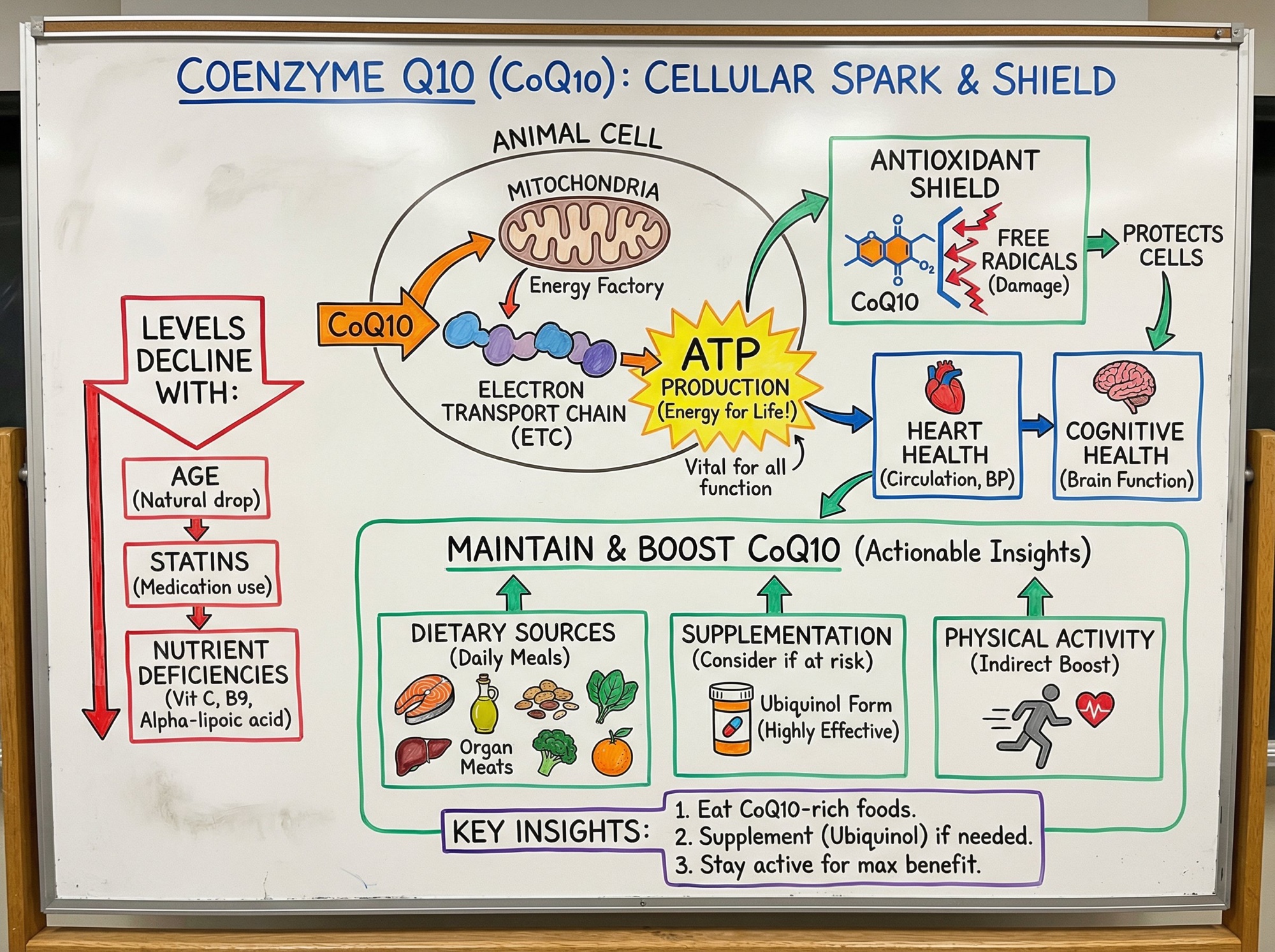
Coenzyme Q10 (CoQ10), also known as ubiquinone, is a vital compound your body produces naturally. It’s often called the “cellular spark” because it plays a key role in the mitochondria – the powerhouses of your cells – where it helps generate ATP, the energy currency that keeps your heart beating, your brain thinking, and your body moving. CoQ10 also acts as a powerful antioxidant, neutralizing free radicals that can damage cells and contribute to aging and disease.
The problem? Your natural CoQ10 levels decline over time, and certain medications – like statins – can accelerate that drop. If you’re one of the millions still relying on statins for cholesterol management, this is particularly relevant.
How CoQ10 Works in Your Body
- Energy Production: CoQ10 shuttles electrons in the mitochondrial electron transport chain, directly contributing to ATP synthesis. Without enough, cells (especially energy-hungry ones like heart and muscle cells) struggle.
- Antioxidant Shield: In its reduced form (ubiquinol), CoQ10 protects cell membranes from oxidative damage, supporting heart health, circulation, blood pressure regulation, and cognitive function.
- Benefits Linked to Healthy Levels: Supports cardiovascular health, brain function, and overall vitality. Low levels are associated with fatigue, muscle issues, and age-related decline.
Why Levels Decline – And Why Statins Are a Major Culprit
CoQ10 production naturally drops with age – studies show significant reductions in tissues like heart, muscle, and skin starting around age 30-40.
But statins make it worse. These drugs inhibit HMG-CoA reductase, an enzyme in the mevalonate pathway that produces both cholesterol and CoQ10. Multiple studies confirm statins lower blood and tissue CoQ10 levels, sometimes by 30-50%. This depletion is thought to contribute to common statin side effects, particularly muscle pain (myopathy), weakness, cramps, and fatigue – affecting up to 10-15% of users and often leading to discontinuation.
While some experts argue the link to muscle symptoms isn’t fully proven in every case, meta-analyses of randomized trials show CoQ10 supplementation often reduces these symptoms (pain, weakness, etc.) compared to placebo. Many patients report relief, and it’s low-risk to try.
Other factors lowering CoQ10:
- Nutrient deficiencies (e.g., vitamin C, B9, alpha-lipoic acid).
- Intense physical stress or certain health conditions.
How to Maintain and Boost CoQ10: Actionable Steps
You can’t rely on diet alone for therapeutic levels – average intake is only 3-6 mg/day – but it helps.
Dietary Sources (highest first):
- Organ meats (liver, heart)
- Fatty fish (salmon, tuna, mackerel)
- Beef, pork, chicken
- Nuts/seeds (pistachios, sesame, peanuts)
- Vegetables (broccoli, spinach)
- Oils (soybean, canola)
Supplementation: Often necessary, especially for statin users or those over 40.
- Preferred form: Ubiquinol (the reduced, active form) – better absorbed, especially in older adults.
- Typical dose for statin-related issues: 100-400 mg/day.
- Take with a fatty meal for best absorption.
Physical Activity: Exercise indirectly boosts mitochondrial efficiency and CoQ10 utilization.
Key Takeaways:
- Prioritize CoQ10-rich foods daily.
- If on statins (or experiencing low energy/aging signs), consider ubiquinol supplementation – discuss with your doctor.
- Stay active to maximize benefits.
CoQ10 isn’t a miracle cure, but maintaining adequate levels supports energy, antioxidant defense, and resilience – especially when statins are depleting yours. It’s safe (mild side effects like stomach upset are rare), well-tolerated, and backed by evidence for helping with statin tolerability. Don’t ignore this “cellular shield” – your mitochondria will thank you.
Leave a Reply
You must be logged in to post a comment.